I. What Is First Article Inspection?
First Article Inspection (FAI) refers to a comprehensive, systematic, and rigorous verification activity conducted on the first or initial few products before the start of mass production in the manufacturing workflow. It is distinctly different from routine in-process inspections during production or final inspections after completion, with its core focus on the initial stage rather than the production process or end results.
To gain a precise understanding of FAI, it is essential to clarify its specific forms in practical manufacturing:
1. First article before mass production launch
This refers to the first finished or semi-finished product produced after the official start of production, equipment changeover, or adjustment of key process parameters. Its core purpose is to validate the stability and reliability of current production conditions (Man, Machine, Material, Method, Environment).
2. First article in continuous production cycles
In long-running continuous production, the first product manufactured at the start of each work shift or after equipment restart following a long downtime. This monitors the sustained controlled status of the production process and prevents quality deviations caused by equipment fatigue or minor parameter changes.
3. First article in multi-process flow
For complex products involving multiple independent processing steps, FAI must be performed for each process before processing begins. This is a layered prevention strategy to avoid defects from upstream processes flowing to downstream stages and prevent the accumulation and amplification of defects.
4. Distinction between pilot production verification and mass production release
In the New Product Introduction (NPI) stage, FAI focuses on verifying design feasibility; in stable mass production, it prioritizes the consistency and stability of process execution.
First article inspection is typically applied in the following critical scenarios:
- Before the first mass production of new products;
- After replacement, maintenance, and readjustment of production equipment, key tooling, or molds;
- When major adjustments or optimizations are made to core production process parameters;
- After replacement of key post operators or production line restart following a long shutdown;
- When suppliers of raw materials or key components are changed.

The objects of FAI can be single precision parts, complex assembly components, or complete end products. The inspection covers multiple dimensions including appearance, critical dimensional tolerances, material and process characteristics, mechanical and electrical properties, and assembly interference, ensuring the physical product fully complies with engineering drawings, technical specifications, and specific customer requirements.
With the globalization of supply chain management, many enterprises rely on platforms such as Inspector Online or engage professional third-party inspection companies to remotely supervise or conduct FAI, ensuring the objectivity and timeliness of inspection data.
II. What Are the Core Purposes of First Article Inspection?
FAI is not an optional administrative procedure but a quality management activity with a high return on investment. Its core objectives are reflected in the following aspects:
1. Prevent systematic quality risks and minimize quality losses
The essence of FAI lies in prevention. Unlike post-production remedial measures, it serves as a critical “check before full-scale resource investment”. By identifying and eliminating potential failure risks before mass production, enterprises can effectively avoid huge economic losses and reputational damage caused by the scrapping, rework, or recall of batch non-conforming products.
2. Verify the stability and comprehensive capability of the production process
FAI acts as a practical drill and comprehensive acceptance check for the six production factors (Man, Machine, Material, Method, Environment, Measurement). Through the qualification of the first article, enterprises confirm:
- Whether production equipment is in optimal operating condition;
- Whether the accuracy and reliability of tooling and fixtures meet standards;
- Whether the set process parameter window is reasonable and robust;
- Whether frontline operators have mastered standardized operating procedures.
Only when all the above factors are verified as controlled can mass continuous production be approved.
3. Ensure alignment between product realization, design intent, and customer expectations
FAI serves as a bridge between virtual design and physical manufacturing. It strictly compares physical products with tolerance symbols on drawings and performance indicators in technical specifications one by one, ensuring the production process faithfully reproduces the original design and delivers products that meet or exceed customer expectations. This is particularly critical in custom machining and high-precision component manufacturing.
4. Establish an objective quality evidence chain to meet compliance and system certification requirements
A detailed and standardized first article inspection report is an indispensable objective evidence in quality management systems. It not only proves that the enterprise has fulfilled necessary quality control obligations and meets the audit requirements of systems such as ISO9001 and IATF16949, but also serves as a legally binding key document in case of future quality disputes or traceability analysis. In addition, FAI reports issued by independent third-party inspection companies carry greater credibility in cross-border trade and supply chain audits.
5. Drive process optimization and improve overall operational efficiency
Problems identified during FAI often point to weak links in the production process. Enterprises can use FAI data as a starting point for continuous improvement, optimize process parameters, improve tooling design, or strengthen personnel training by analyzing deviation trends, eliminating quality risks while enhancing overall production efficiency and yield rate.
III. How to Professionally Implement First Article Inspection?
Efficient FAI requires a rigorous systematic methodology rather than random sampling based on personal experience. Below is the proven standard implementation process and key points:
1. Thorough Preparation for First Article Inspection
- Document preparation and verification:Collect and review all relevant controlled documents, including the latest version of product drawings, technical specifications, process instructions, inspection benchmarks, and special customer requirements. Ensure all documents are valid versions to avoid misjudgment caused by incorrect document revisions.
- Development of inspection plans:Compile a detailed First Article Inspection Work Instruction or dedicated report form based on product characteristics and risk assessment. Specify all mandatory inspection items, sampling locations, measurement methods, testing tools, and qualification criteria.
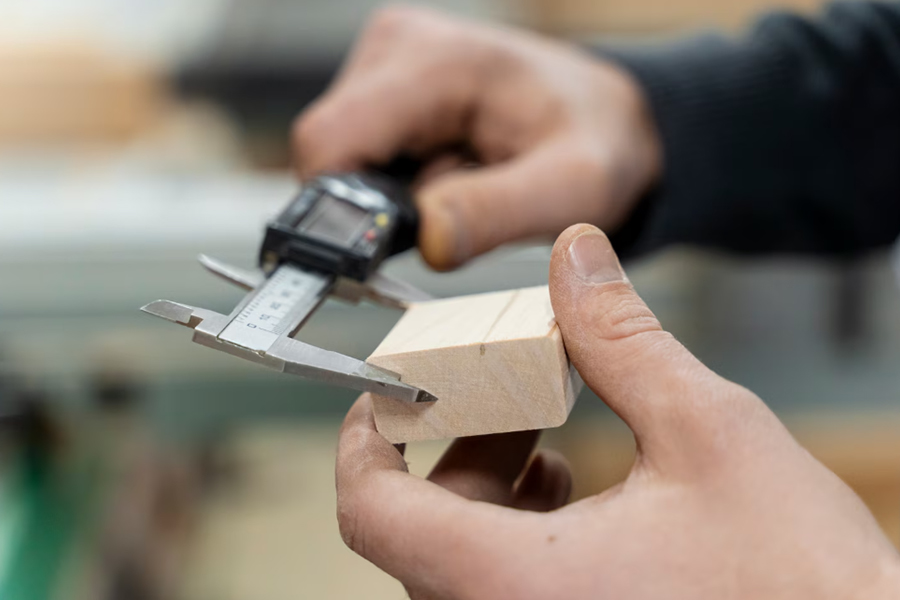
- Inspection resource preparation and equipment calibration: Confirm that all required inspection, measurement, and test equipment (e.g., calipers, micrometers, roughness testers, Coordinate Measuring Machines (CMM), hardness testers) are ready and within valid calibration periods. Select measuring tools with resolution and accuracy matching product tolerance grades.
- Personnel qualification and authorization: Assign quality and technical personnel who have received special training, are familiar with product requirements, and hold corresponding inspection qualifications to perform FAI.
2. On-Site Execution and Data Collection
- Sample identification and traceability: Obtain the first article sample from the production line and immediately label it as “First Article”. Record key traceability information such as production batch number, production date and time, corresponding equipment number, and operator name. Ensure the sample is manufactured under normal mass production tempo and process conditions.
- Comprehensive item inspection: Conduct inspections strictly in accordance with the inspection plan, mainly including:
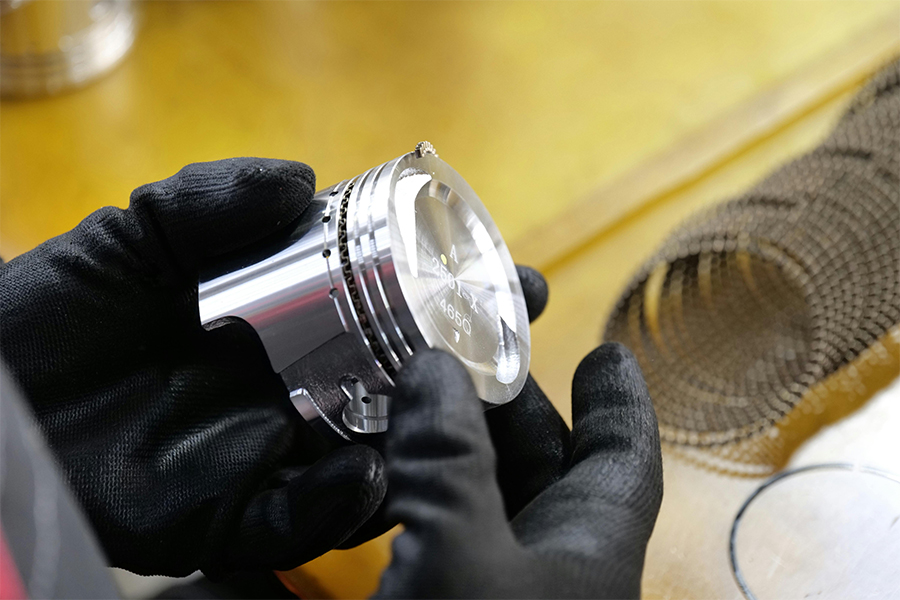
Dimensional inspection: Measure all critical dimensions and tolerances specified in drawings with precision measuring tools.
Appearance inspection: Inspect surface finish, color, texture, burrs, and all visible defects under standard lighting conditions.
Material verification: Confirm that raw material grades and heat treatment status meet requirements through spectral analysis, hardness testing, or other methods when necessary.
Performance and functional testing: Perform electrical continuity tests, air tightness tests, smooth operation tests, and other tests required by product specifications.
Assembly and interchangeability verification: Conduct physical fitting checks between the first article and matching parts to verify assembly relationships and interchangeability.
- Accurate data recording: Clearly and accurately record all measured values in the dedicated First Article Inspection Report, with no fictitious filling or post-recording allowed. For non-quantifiable appearance items, attach comparison with standard samples or retain photos for record.
3. Result Judgment and Closed-Loop Processing
- Data comparison and analysis: Compare measured data with standard tolerances or requirements item by item, and analyze the distribution range and trend of data. Focus not only on qualification results but also on whether data is close to upper and lower limits (critical state).
- Issuance of judgment conclusions:
Approved: All characteristics meet requirements, and mass production is permitted.
Conditionally approved/under observation: Minor defects exist in non-critical secondary characteristics but do not affect assembly and function; production can be released with enhanced monitoring of such characteristics during the process.
Rejected: Any critical characteristic fails to meet requirements, or multiple secondary characteristics are severely out of tolerance. Production must be halted immediately.
- Abnormality correction: For rejected results, immediately launch the non-conforming product review and corrective and preventive action (CAPA) process. This includes isolating the first article sample, organizing a team to analyze root causes, implementing corrective measures, verifying rectification effects, and re-selecting first articles for re-inspection until qualification is achieved.
- Document filing and traceability: The completed first article inspection report shall be reviewed and signed by quality engineers and production supervisors, and filed in accordance with quality record control procedures for future reference.
4. Key Notes for Implementing First Article Inspection
- Timing control: FAI shall be conducted immediately after equipment and mold debugging are stabilized and parameters are finalized, to avoid losing significance due to premature inspection (unstable process) or delayed inspection (already producing waste products).
- Sample representativeness: Ensure the inspected sample truly represents the status of subsequent mass production.
- Strict implementation: The scope and rigor of FAI shall far exceed routine in-process inspections. In addition to conventional dimensions, focus on hidden characteristics that are highly affected by changeover but easily overlooked in routine inspections.
- Dynamic adjustment strategy: Differentiate the rigor of FAI according to the product’s critical safety level. For components involving safety regulations or core functions, implement a 100% full-dimensional and full-functional FAI plan. For enterprises lacking internal inspection resources, entrusting professional third-party inspection companies to conduct FAI and accessing real-time reports via the Inspector Online system is an efficient and cost-effective quality assurance solution.