During Production Inspection (DPI) is a quality control service carried out while production is still in progress, helping buyers identify defects and process issues before the full order is completed. It allows factories to take corrective action early, reducing rework, shipment delays, and quality risks. Unresolved quality issues can lead to costly rework and transportation expenses, while also damaging brand reputation and customer relationships. Against this backdrop, During Production Inspection (DPI), a proactive quality control measure, is increasingly regarded by professional buyers as an indispensable “safety fuse” in supply chain management. This article provides an in-depth analysis of the logic, implementation essentials and far-reaching value of during production inspection for modern supply chains.
1. What is During Production Inspection (DPI)?
During Production Inspection, commonly abbreviated as DPI in the industry, refers to a random quality check conducted at a critical stage of the product manufacturing process. Unlike the one-off final inspection only performed before shipment, DPI acts like a “mid-game interception” in a football match. Its core purpose is not merely to judge product eligibility, but to identify process deviations and risks at an early stage and provide timely, feasible corrective actions for factories.
According to industry practices, DPI is typically initiated when 20% to 30% of the total order quantity is completed. This stage is strategically significant: a considerable number of semi-finished or finished products have rolled off the production line, sufficiently reflecting the process level and consistency of mass production; meanwhile, the unproduced capacity (70%–80% remaining) remains highly malleable. If issues are detected at this point, the factory has ample time and space to adjust molds, revise process parameters, or replace non-conforming components, thus preventing the same problems from occurring in subsequent unproduced batches at the source.
In terms of implementation, professional inspectors strictly follow the customer’s process requirements, Acceptable Quality Level (AQL) standards, and special packaging instructions to conduct on-site inspections at production lines. Taking Inspector Online’s DPI service process as an example, inspectors do not only check finished products at the end of assembly lines but also station themselves at key production processes to evaluate the processing accuracy of semi-finished products, verify workers’ operational standardization, and issue a highly valuable production capacity and delivery feasibility assessment report based on the factory’s current staffing, materials and equipment conditions. This detailed report ultimately helps clients cut through the fog of production and gain clarity on the actual progress and potential risks of their orders.
2.When Should You Arrange a During Production Inspection?
During Production Inspection is typically recommended when around 20%–30% of the order has been completed. At this stage, there are enough finished or semi-finished products to evaluate production quality, while there is still time for the factory to correct problems before full production is completed.
DPI is especially suitable for large-volume orders, products with complex production processes, new suppliers, repeat orders with previous quality issues, or orders with strict delivery schedules. It helps buyers reduce the risk of discovering major defects only at the final inspection stage.
3. Eight Core Essentials of During Production Inspection
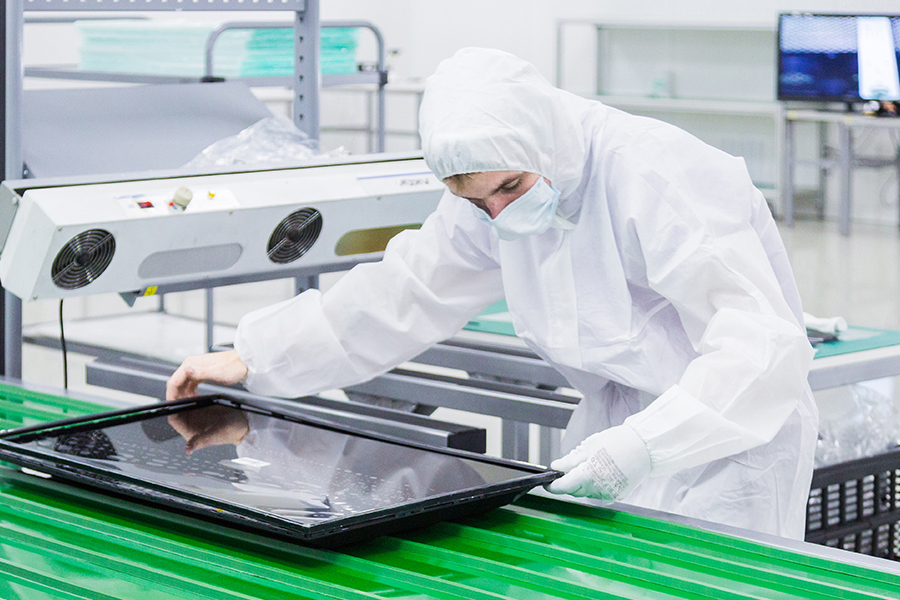
A high-quality during production inspection is by no means a cursory check; it follows a rigorous logical system. Below are the eight key dimensions that professional inspectors must cover when performing DPI:
(1) Confirmation of Key Process Nodes
Every product has core processes that determine its final quality, such as PCBA (Printed Circuit Board Assembly) soldering for electronic products, mortise and tenon jointing for furniture, and stripe matching for textile cutting. Inspectors must first verify whether these key nodes strictly comply with the specifications of engineering samples, preventing full-line scrap caused by initial equipment debugging deviations.
(2) Production Capacity Assessment and Delivery Schedule Verification
This is the most distinctive feature that differentiates DPI from final inspection. Inspectors review the factory’s daily output reports, number of workers on duty at each process, production line speed, and raw material inventory. Through data modeling, inspectors can accurately determine whether the factory can fulfill the entire production order by the contracted date. If delay risks are identified (e.g., material shortages or insufficient manpower), clients receive early warnings and have time to take remedial measures such as urging the factory to add production lines.
(3) Sampling Inspection of Semi-Finished and Finished Products
In accordance with internationally accepted sampling standards (e.g., ANSI/ASQ Z1.4), inspectors randomly select samples from the completed 20%–30% batch. For semi-finished products, focus is placed on checking the reliability of internal structures, wiring and welding points; for finished products, a comprehensive inspection of appearance, dimensions and functionality is carried out. This step aims to answer a core question: Can products manufactured with the current process meet the minimum quality requirements for mass production?Where applicable, defect findings may be evaluated using agreed Acceptable Quality Level (AQL) criteria, typically classified as Critical, Major, or Minor defects according to the buyer’s inspection requirements.
(4) Inspection of Production Quantity and Product Appearance & Craftsmanship
Inspectors reconcile the actual production quantity with the production schedule and calculate the true yield after deducting defective and scrapped products. Meanwhile, a special inspection is conducted on appearance craftsmanship (e.g., coating gloss, printing clarity, burr treatment), as appearance issues are often the primary cause of customer complaints.
(5) On-Site Testing
Based on product characteristics, inspectors perform necessary destructive or non-destructive tests on the production floor. Examples include carton drop tests for packaging boxes, tensile tests for cables, and high-voltage or power tests for electrical appliances. On-site testing quickly exposes hidden hazards deep within materials or assemblies.
(6) Packaging Review
Although full production is not yet completed, the packaging method of the first off-line batch is highly referential. Inspectors review whether outer box markings, inner box dimensions and protective fillers meet transportation requirements, especially whether the packaging structure of fragile and heavy items is sturdy, to avoid damage to the entire batch during long-distance ocean shipping due to improper packaging.
(7) Implementation of Client’s Special Requirements
Each client has unique specifications, such as specific barcode placement, instruction manual folding methods, and designated screw torque values. DPI verifies whether the factory has communicated these special instructions to every frontline worker and integrated them into standard operating practices.
(8) Real-Time Problem Recording and Improvement Recommendations
Inspectors not only document defects but also analyze root causes (e.g., mold wear, insufficient worker proficiency) based on experience, and propose specific Corrective and Preventive Actions (CAPA) with the factory. Through Inspector Online’s digital platform, these real-time reports with visual materials are delivered to clients within as fast as 4 hours, allowing buyers thousands of miles away to monitor the production site as if they were there in person.
4. What Happens After a During Production Inspection?
After the inspection, buyers receive a detailed inspection report covering production progress, sampled products, identified defects, test results, photos, and the inspector’s overall assessment. If significant quality issues are found, the factory can be asked to take corrective action before production continues. Buyers can then decide whether a follow-up During Production Inspection or a Pre-Shipment Inspection is needed before shipment.
For serious or repeated defects, the report can also be used to verify whether corrective actions have been implemented effectively before the remaining production is completed.
5. Why Are Modern Supply Chains Inseparable from During Production Inspection?
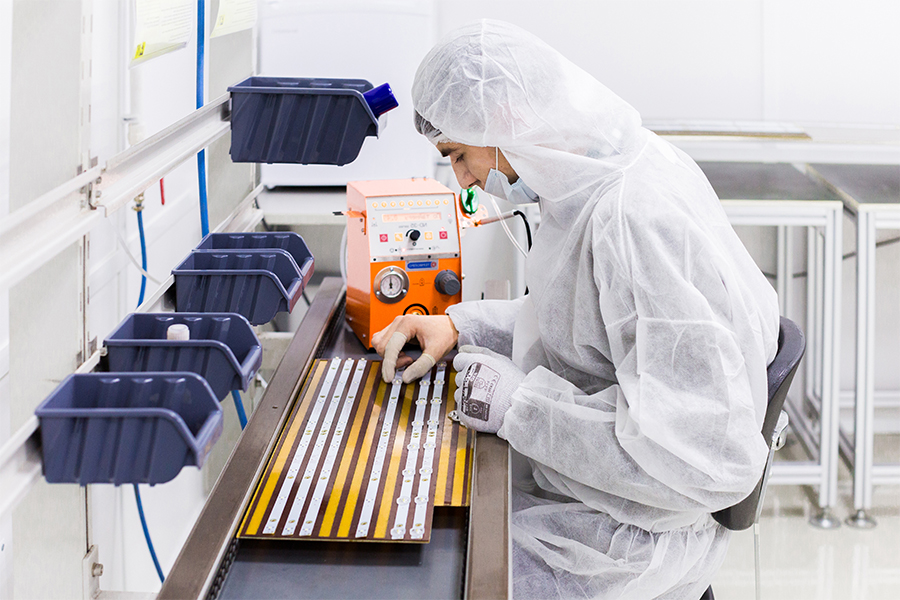
Many enterprises in their early stages view DPI as an “unnecessary cost”, only to regret it deeply after suffering heavy return losses. In fact, the value delivered by during production inspection far exceeds its modest investment:
(1) Interception of Process Deviations
Deviations in production are often subtle and gradual. For instance, a one-degree temperature deviation in an injection molding machine may result in barely acceptable appearance for the first 30% of products, but accumulated stress in the mold could lead to large-scale cracking in subsequent batches. DPI acts as an early warning radar, eliminating deviations before they escalate into disasters. The cost of such prevention is far lower than the cost of failure in later stages.
(2) Reduction of Rework Losses
Discovering issues only before shipment usually means full inspection or rework, with delivery delays inevitable. However, identifying problems at the 20% completion stage allows the factory to rectify issues calmly using remaining capacity without disrupting subsequent production schedules. For high-value complex products (e.g., medical devices, precision instruments), phased control via DPI is the only way to ensure every process meets requirements.
(3) Control of Production Schedules
DPI reveals actual production capacity through objective production data, enabling buyers to make fact-based decisions, manage production plans more effectively, and avoid shipment delays caused by blind trust.
During production inspection is a practical science integrating engineering technology, statistics and management. For small and medium-sized enterprises with limited resources, building an in-house global inspection team is costly and difficult to manage. In this case, leveraging a professional third-party inspection services is the most efficient solution.
Platforms like Inspector Online not only have a team of senior inspectors covering major industrial clusters nationwide but also streamline complex DPI processes to be transparent and efficient through standardized procedures and digital reporting systems. Wherever you are, a simple online appointment adds a robust quality firewall to your orders.
In a fiercely competitive market, quality is not achieved through inspection alone—it is achieved through prevention. Choosing during production inspection, and choosing Inspector Online, means opting to protect maximum commercial interests at the minimum cost.
6.Need a During Production Inspection?
Inspector Online provides During Production Inspection services for buyers who want to identify quality and production risks before their orders are completed. Our inspectors can check production progress, workmanship, product quality, packaging, and key buyer requirements directly at the factory.
If production is already underway, request a DPI inspection or get a quote before the order reaches the final stage. After production is completed, a Pre-Shipment Inspection can help verify the final product quality before shipment.