
From signing the approved sample to the container leaving the factory, an order usually has only 30 to 60 days. How many third-party inspections fall inside that window, and on which days, decides one thing above all: how much room the factory still has to fix a problem once it is found.
The pattern most of the industry uses is four checkpoints — an Initial Production Check (IPC) one to three days after production starts, a During Production Inspection (DPI) at 20–40% completion, a Pre-shipment Inspection (PSI) once production is 100% complete and at least 80% packed, and Container Loading Supervision (CLS) on the loading day. Leave five to seven days of buffer between checkpoints, and treat the stretch between PSI and loading as the one that should never be squeezed.
What follows answers three questions: what each checkpoint is actually for, how to convert the checkpoints into specific calendar days, and how to adjust when lead times are tight, peak season clogs the lines, or several suppliers share one container.
1. A checkpoint’s value lies not in how many you run, but in how much can still be changed
Many buyers treat inspection as a single quality gate: the goods are finished, you inspect once, and if they pass you ship. That works, barely, with a stable long-term supplier and a simple product. On a first order, a new factory or a new category, it is a high-risk approach. The reason is simple — when a problem is found determines what you can still do about it.
Take a fixture misalignment of 1.5 mm. Found at 5% of production, the fix is adjusting the mould and reworking the jig, at the cost of a few days of line time. Found at 100% of production, the only options left are 100% sorting, rework and disassembly, or a price reduction with after-sales costs landing on you. The cost gap between those two outcomes is not a matter of degree.
| Checkpoint | Entry point | Not yet produced | Remedial options still available |
|---|---|---|---|
| Initial Production Check | 1–3 days after production starts | ~90% | Change the mould, swap materials, adjust process parameters |
| During Production Inspection | 20%–40% complete | 60%–80% | Adjust the process, tighten in-line checks, re-plan the delivery date |
| Pre-shipment Inspection | 100% produced, ≥80% packed | 0 | 100% sorting, rework, hold the shipment |
| Container Loading Supervision | Loading day | 0 | Refuse the container, swap containers, add bracing, document for a claim |
Read the table as a sliding window. The earlier you step in, the more remedies you keep — but the less you can say about production consistency. The later you step in, the more accurate your judgement of the finished goods — but remedial power is nearly gone. Running all four checkpoints on the same lot is how you get early warning and final confirmation at once.
2. Where each of the four checkpoints sits in the process

Checkpoint 1 | Initial Production Check (IPC): 1–3 days after production starts
An IPC is not “looking at a few samples”. It confirms that the materials, moulds and process parameters used in mass production are the same set that was signed off with the customer. This is the checkpoint most often skipped — and the one that most often becomes the root of a dispute later.
The on-site check normally covers:
- Completeness of the signed and sealed samples — is there a gold sample signed by both sides, with colour cards, material references and print artwork all in place?
- Whether the materials drawn for the first batch match the signed sample (fabric weight, plating colour on hardware, resin colour code);
- Whether key process parameters have been set and recorded (injection temperature and cycle, stitch density, plating bath chemistry and dwell time);
- Whether packaging materials are on site (colour boxes, instruction sheets, barcodes, shipping marks) — routinely overlooked, yet it decides whether the PSI can even be held on schedule.
There are normally three possible conclusions: approve mass production, approve after correction within a deadline, or suspend production. The third is not rare with small factories and first orders — calling a halt two days earlier is far cheaper than reworking twenty days later.
Checkpoint 2 | During Production Inspection (DPI): 20%–40% complete
The point of a DPI is not “pulling a batch to see whether it passes”. It answers two questions: have systemic problems appeared, and will the current pace hit the delivery date?
By this stage enough finished goods have come off the line to show whether dimensional drift, colour deviation, assembly interference or functional failures are appearing in batches — and more than 60% of the order is still unproduced, so process changes, resequencing and extra in-line checks are all still possible. A DPI is also the best moment to decide whether the PSI date needs to move: if only half the lines are running and key materials have not arrived, reschedule now rather than discover on PSI day that the order cannot be finished.
For categories with long process chains and heavy subcontracting — plating, coating, heat treatment, printing — a DPI is especially worth keeping, because problems in those steps usually surface as batch-wide cosmetic defects, and the only real remedy is sending the whole batch back to the subcontractor.

Checkpoint 3 | Pre-shipment Inspection (PSI): 100% produced, 80%+ packed
This is the inspection most buyers know best, and most often treat as the only one. It has two hard preconditions: all production finished, and at least 80% packed. Miss either and the conclusions lose credibility — sampling from loose goods cannot verify pack ratios, shipping marks, barcodes or packaging protection, and those are exactly the points where overseas warehouses and retail buyers raise the most claims.
Sampling generally follows the ISO 2859-1 AQL system. Note that the standard was revised in January 2026 (ISO 2859-1:2026): alongside the single, double and multiple plans it adds guidance on skip-lot sampling and states more clearly when each sampling strategy applies, while the 1999 edition and its amendments are withdrawn. If a customer’s inspection protocol still cites the old clauses, it is worth updating at contract review.
On sample size, the NIST/SEMATECH Engineering Statistics Handbook explains publicly how MIL-STD-105D sampling plans are selected, which helps when reading the “lot size → code letter → sample size → acceptance number” chain alongside the AQL tables. Common practice is general inspection level II, with AQL 2.5 or 4.0 for appearance and 1.0 or 1.5 for function. A 5,000-piece lot works out to roughly 200 samples, a 20,000-piece lot to 315. Add appearance, dimensional, functional and packaging checks, and one inspector needs about 1 to 1.5 man-days for a full PSI.

Checkpoint 4 | Container Loading Supervision (CLS): on the loading day
CLS covers the risk in the stretch between “the goods have been inspected” and “the goods are on board”. What the inspector verifies is quite different from the first three:
- Container condition: container and seal numbers recorded, interior watertight, no odours or pest traces, floor intact;
- Quantity and marks: actual carton count, shipping marks matched to the shipping list, mixed-load ratios correct;
- Stacking and securing: heavy goods at the bottom, dunnage bags and lashing in place, space left at the doors for unloading;
- Documentation: photos at four stages — empty container, half loaded, fully loaded, doors closed and sealed — with the seal number stated in the report.
The value only shows up when there is a dispute. Wet cargo, crushed cartons or short shipments with no supervision record usually end up as a blame game between shipper and forwarder; with a complete photo set and a seal number, claims and traceability get much simpler.
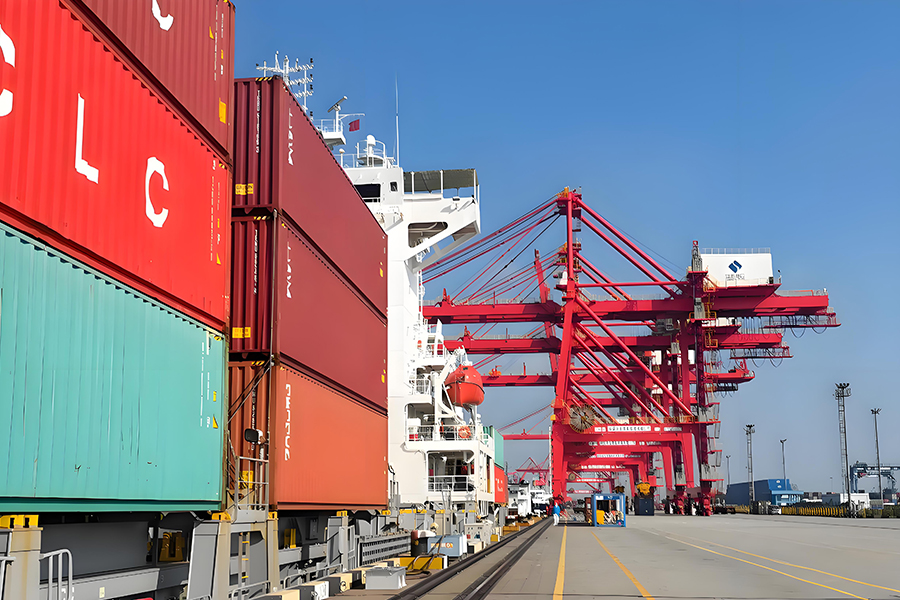
3. Converting to calendar days: schedules for three typical lead times
Using the sample sign-off date as D0 and the loading date as the last day of the lead time, here are reference schedules for 30-, 45- and 60-day lead times. A drift of one or two days either way, depending on line conditions, is normal.
| Step | 30-day lead time | 45-day lead time | 60-day lead time |
|---|---|---|---|
| Sample sign-off and sealing | D0 | D0–D2 | D0–D3 |
| Materials in place, production starts | D1–D2 | D3–D5 | D4–D6 |
| Initial Production Check | D3 | D5–D6 | D6–D7 |
| During Production Inspection | D12–D14 | D18–D20 | D22–D25 (a second DPI at D35 if needed) |
| Pre-shipment Inspection | D22–D24 | D36–D38 | D50–D52 |
| Rework / re-inspection buffer | D25–D27 | D39–D42 | D53–D57 |
| Container Loading Supervision | D28–D30 | D43–D45 | D58–D60 |
The table also works backwards. If the buyer gives you only a loading date, count back: five days before loading is the latest PSI date, 10 to 15 days before that is the DPI, and the IPC belongs within 72 hours of production starting. If the dates you derive land before the sample was signed, the lead time itself is unworkable — the conversation should be about extending the lead time or splitting the shipment, not about compressing inspections.
Four hard rules for scheduling
- Pre-shipment inspection no less than 5 days before loading — allowing for rework, inland trucking and customs;
- DPI no less than 10 days before PSI — otherwise a defect found has no time to be corrected;
- IPC within 72 hours of production starting, using the same batch of materials as mass production;
- In peak season (August–October, and the month before Chinese New Year), lock slots 2–3 days earlier than the above.
4. Seven variables that move the schedule
The same four checkpoints land very differently across categories and factories. Walk through these before fixing dates:
1. Process chain length and subcontracted steps. Every outsourced step — plating, coating, heat treatment, printing — adds a stretch of time you do not control. One out-and-back subcontract usually runs 3 to 7 days, and subcontractors do not take rush orders, so the DPI has to sit after the goods return.
2. Lot size and sample size. Lot size drives sample size, and sample size drives man-days. A 5,000-piece order can be done by one inspector in a day; from 20,000 pieces upward, with functional testing and full dimensional measurement, plan for two man-days — a same-day round trip leaves very little margin.
3. Packaging readiness. A PSI presumes at least 80% packed. If cartons, colour boxes or instruction sheets arrive three days late, the inspection has to be rescheduled — and rescheduling usually collides with the vessel. Put packaging material arrival dates into the schedule and treat them the same as line progress.
4. Factory schedule volatility. Rush orders, labour shortages, power restrictions and equipment maintenance all turn “40% done” into a verbal estimate. Judge real progress from three things: how much came off the line today, how much work-in-process is stacked in the packing area, and how many lines are running.
5. Rework and re-inspection cycles. Cosmetic sorting rework typically takes 3 to 5 days; rework involving re-plating, repainting or disassembly takes 7 to 10 days. Where a category has a history of high rework rates, allow the upper end of the buffer.
6. Sailing dates and port cut-off. A passed PSI does not mean the goods are on board. Trucking, customs declaration, port entry and cut-off each take a fixed stretch, so the anchor for counting backwards is the cut-off date, not the loading date. Customs clearance time data published by China’s General Administration of Customs is a useful baseline (customs.gov.cn).
7. Inspector availability and geography. Inspectors are a man-day resource, not on-call labour. Cross-province assignments usually need an extra day of travel; in peak season, slots in concentrated manufacturing areas (Ningbo, Shenzhen, Dongguan, Yiwu) fill early, so booking 7 to 10 days ahead is the safer call.
5. How to combine the checkpoints in three typical scenarios
Scenario A: New factory or first order in a new category
Keep all four checkpoints, and add a pre-production meeting or pilot run evaluation before production starts. A new supplier’s real capability usually shows up in the first 5% of output: substituted materials, simplified processes, missing inspection stations. One IPC tells you more than ten pages of credentials. Fix the IPC for day 2–3 after production starts; do not let it slide past day 5.
Scenario B: Repeat orders with a stable supplier
This can be reduced to IPC + PSI + CLS, with the DPI used selectively by risk. The basis for that decision is not how many years you have worked together, but the factory’s PSI defect rate, rework frequency and complaint record over the past six months. The logic of acceptance sampling supports the same approach: with consistently stable quality you can move to reduced or skip-lot inspection, and switch back to normal or tightened when something goes wrong — the thinking behind the switching rules in ISO 2859-1:2026.
Scenario C: High-value or high-complaint categories
For products with functional parts, electrical components, child-contact items or high unit prices, use IPC + two DPIs + PSI + CLS. Place the second DPI at around 70% completion and dedicate it to verifying that the previous corrective actions were actually implemented — many quality problems are not missed, they are simply never closed out.
6. Seven common pitfalls
Pitfall 1: Pre-shipment inspection only. Putting your single inspection after 100% completion throws away every chance to correct. The report may be thorough, but all you can still do is rework or accept on concession.
Pitfall 2: Scheduling on “the factory says it’s 90% done”. Verbal progress and inspectable condition are two different things. The reliable way to confirm is to ask for same-day line photos, carton counts and packaging material receipts before keeping the original date.
Pitfall 3: PSI and loading on the same day. This is the most common squeeze and the most dangerous. If the inspection fails, the rework window is zero and the choice is between shipping defective goods and missing the vessel.
Pitfall 4: Going into production without a signed sample. Without a sealed sample agreed by both sides, the IPC has no benchmark, and the report can only state “consistent with the sample the factory described” — a conclusion of little use in a dispute.
Pitfall 5: Ignoring the inspection hours a sample size implies. Booking half a day for a large lot, when you actually need to draw 315 pieces, measure every dimension and check function and packaging, is not something one inspector can finish in a day. Under-estimated man-days always show up in report quality.
Pitfall 6: Booking inspections at short notice in peak season. August to October is the shipping peak, and inspection slots in the manufacturing belts are often filled weeks ahead. Late booking typically pushes the inspection to the day before loading — straight back to pitfall 3.
Pitfall 7: Inspecting only one supplier when a container is consolidated. With consolidated loads, every supplier’s goods need their own inspection record and packing list, or responsibility for short shipments, wrong marks and mixed loads cannot be assigned. Hardware and tools are especially detail-heavy in this respect — see the checklist in hardware tools inspection.
One operating detail is easy to overlook: how fast the report arrives. To decide “release, rework or reschedule” the same day, you need the photo report within 24 hours of the inspection finishing. If the report takes three days, even the tightest schedule slips back to square one.
7. FAQ
Do I have to run all four checkpoints?
No. The number of checkpoints should match the risk. For new factories, new categories and high-value or high-complaint products, run all four. With a stable supplier and a low historical defect rate, reduce to IPC + PSI + CLS. Two are best not dropped: PSI, which confirms quality, and CLS, which confirms quantity and transport risk — different jobs entirely.
What is the difference between an IPC and a pre-production meeting?
A pre-production meeting is communication, held before production starts, to confirm standards, responsibilities and key control points. An IPC is verification, held after production starts, proving with physical goods that those standards were actually followed. They cannot replace each other — the meeting happens and nobody follows it, which is the most common situation on a first order.
How many days should a PSI sit before loading?
Five days minimum as a rule, seven for categories with high rework risk. Those five days need to cover three things: rework or sorting, repacking, and inland transport plus customs. If the sailing date is locked and cannot move, bring the PSI forward rather than compress the buffer.
With a 25-day lead time, how many inspections fit?
Working backwards, a 25-day lead time fits one IPC and one PSI; a DPI is very hard to squeeze in. In that case, make the IPC thorough (covering materials, process and packaging) and increase the sample size and functional testing at PSI, using a deeper single inspection to compensate for fewer checkpoints.
How is the sample size set, and what does AQL 2.5 mean?
Sample size is determined jointly by lot size, inspection level and AQL, using the ISO 2859-1 sampling tables. AQL 2.5 means an acceptable quality level of 2.5% — acceptable when the long-run average defect rate of the lot does not exceed 2.5%. It does not mean “2.5% defectives are allowed to ship”; it is a statistical threshold for the sampling decision. The acceptance number has to be read from the tables, not estimated from experience.
What if the DPI shows a high defect rate?
First separate systemic problems from isolated ones. If the cause is a mould, process or material issue, stop the line and correct it, and move the PSI date back accordingly. If it is an operator issue at one station, add in-line checks and a 100% inspection station, and schedule a re-check. Either way, confirm the responsible person and completion date in writing.
How are inspection fees calculated?
Third-party inspection is charged per man-day, and depends on lot size, the scope of checks and travel time to the factory. Inspector Online’s pricing starts from USD 103 per man-day, covering the on-site inspection, sampling judgement and an illustrated report; functional testing, full dimensional measurement or multi-site assignments are charged by actual man-days.
Conclusion: scheduling is really about leaving time to fix problems
Putting four checkpoints on a calendar is not difficult. What is difficult is accepting one thing: scheduling is not about inspecting more — it is about making sure every problem is found while something can still be done about it. The IPC protects the process benchmark, the DPI protects the rework window, the PSI protects delivery quality, and CLS protects quantity and transport liability. Each guards one stretch, and wherever one is missing, that is where the risk comes in.
If your lead time is tight, your process chain is long, or you are simply not sure how many inspections to plan for, send us the product category, lot size and loading date — we will suggest checkpoints and pricing based on your actual process chain.
3,000+ inspectors across China’s main manufacturing hubs | From USD 103 per man-day | Formal inspection report issued on site, in as fast as 4 hours