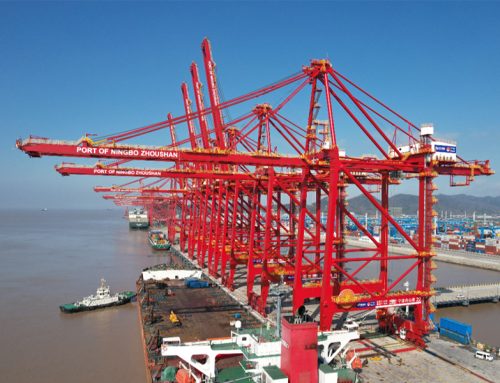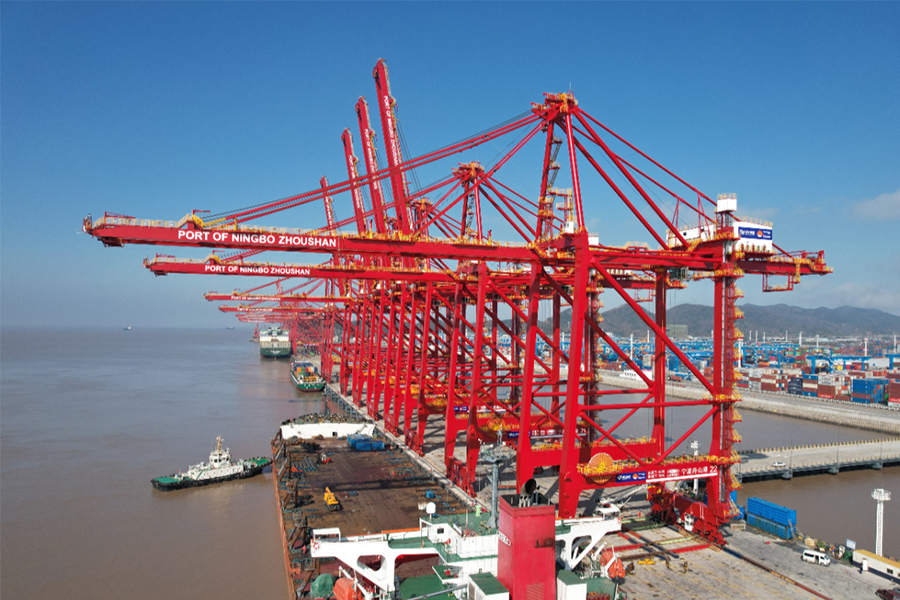
2025, Shanghai’s foreign trade in goods reached RMB 4.51 trillion, up 5.6% year on year — with exports up 10.8% and imports up 1.8%, all three figures hitting record highs (Shanghai Customs data). Shanghai Port has ranked first in the world for container throughput for many consecutive years. What matters even more is the structure: procurement decisions, brand headquarters, and trading companies are concentrated in Shanghai, while factories are scattered across the Yangtze River Delta hinterland in Jiangsu, Zhejiang, and Anhui — and most goods ship out through Shanghai’s ports. This “hub-and-hinterland” structure makes the inspection landscape in Shanghai very different from that of other manufacturing cities.
If you are sourcing in Shanghai, or handling export goods through the city, this article answers three questions: what to inspect and when in a Shanghai context; how much it costs; and how to choose a reliable inspection company.
Quick overview
- Three typical Shanghai inspection scenarios: procurement HQ in Shanghai with factories nearby, container loading supervision at Shanghai Port, and inbound acceptance inspection on arrival
- Best timing for pre-shipment inspection (PSI): when 100% of production and 80% of packing are complete, and always before the final payment
- Pricing is per inspector-day: basic inspection from RMB 550/person-day, standard inspection from RMB 600/person-day; no extra travel fees in Shanghai and most major Yangtze River Delta cities
- Choosing a company comes down to 4 hard criteria: locally based inspectors, report turnaround time, traceable inspectors, and transparent cost boundaries
1. Three Typical Shanghai Procurement Scenarios: Your Inspection Need May Lie “Beyond Shanghai”
Scenario 1: Procurement team in Shanghai, factories in the Delta hinterland
This is the most common setup in Shanghai. Factories may sit in Taicang (Suzhou), Jiaxing, Nantong, Ningbo, or Yongkang — one to two hours’ drive from Shanghai — yet a procurement team cannot be on-site every day. When multiple factories and orders run in parallel, two risks are common. First, the sample is fine but the bulk order drifts (batch-to-batch variation in incoming materials, process drift). Second, the factory reports that “everything is on schedule” when production has actually fallen behind, and by the time you notice, the inspection window has already slipped past the payment milestone.
The fix is to book Shanghai-based inspectors who can be dispatched nearby: factories in neighboring cities can typically be visited the next day, with same-day departure available for rush jobs — and no extra travel cost from cross-city assignment. Sending an inspector from out of town usually adds RMB 300–500 in travel fees and makes scheduling far less flexible.
Scenario 2: Shipping out via Yangshan or Waigaoqiao — the final checkpoint of PSI + loading supervision
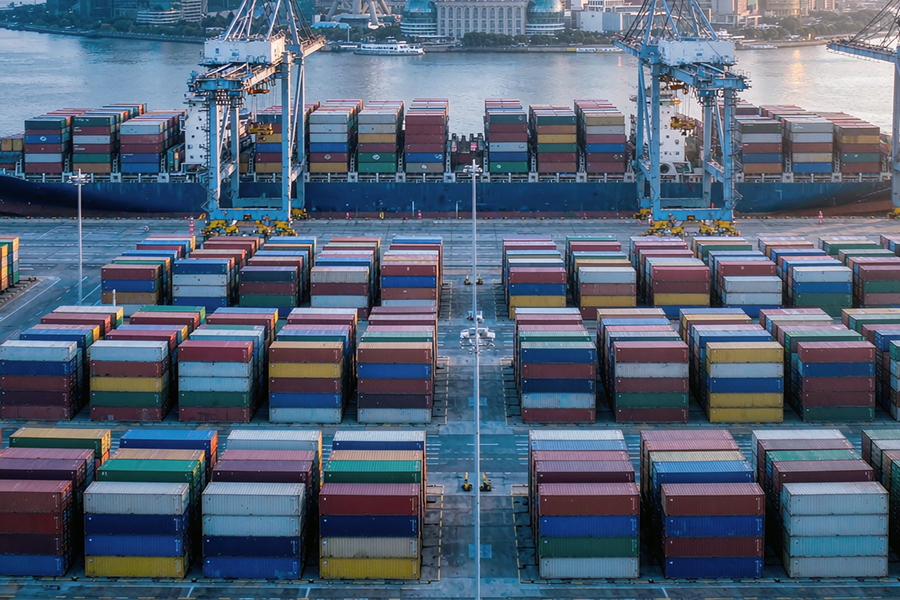
Even when factories are in Anhui, Jiangsu, or Zhejiang, export goods often consolidate and ship out through Shanghai. A recommended one-two punch: pre-shipment inspection (PSI) to confirm quality → container loading supervision (CLS) to safeguard quantity and seal closure. Between a passing PSI and loading, goods can still be swapped, short-loaded, or roughly handled. Loading supervision photographs every stage — empty container, half-full, full, and sealed — and records the container and seal numbers in the report, so any problem can be traced back to a specific step. Loading supervision and inspection can be assigned to the same inspector back-to-back, saving one dispatch fee compared with booking them separately.
Scenario 3: Acceptance inspection for imports arriving in Shanghai
This is the scenario most guides overlook, yet its volume is huge: Shanghai imported RMB 2.49 trillion in 2025, and many companies receive goods at Shanghai Port or bonded warehouses before distributing nationwide or into e-commerce fulfillment centers. A third party can perform an acceptance inspection on arrival: verifying quantities, checking for transit damage, confirming labels and batch numbers, and documenting everything on site with photos. Locking in the evidence before goods enter the sales channel is what gives you grounds to claim against carriers and insurers later.
2. Key Industrial Belts in the Delta and High-Frequency Inspection Items
The industrial layout of Shanghai and its surroundings determines which product categories need inspection most often. Below is what inspectors actually do on-site (limited to checks that can be completed at a factory or warehouse):
Automotive and new-energy components (Jiading, Lin-gang, and nearby Suzhou, Ningbo)
- Dimensional tolerances: verifying each item against the drawing with calipers, micrometers, and go/no-go gauges, and recording actual measurements
- Appearance: dents, scratches, burrs, and the condition of anti-rust treatment
- Functional assembly: on-site tests such as torque re-checks, connector insertion/extraction, and air-tightness
- Marking and packaging: part numbers and batch labels, anti-rust bags and desiccant, carton mark verification
Electronics and smart hardware (Zhangjiang, Lin-gang, and Kunshan, Suzhou)
- Powered-on function testing: boot-up, screen, buttons, and ports checked item by item against a checklist
- Appearance and construction: scratches, gaps, screws, screen printing, and label placement
- Accessories and documentation: complete manuals, cables, and certificates of conformity, plus a barcode scan test on the outer carton
- Basic safety checks: on-site items such as power-on and earth-continuity testing (in-depth testing is arranged separately at a lab)
Medical devices and laboratory consumables (Zhangjiang)
- Quantity and batch verification: order, packing list, and physical goods matching three ways, with legible, traceable batch numbers and production dates
- Packaging integrity: primary packaging free of damage, seals free of wrinkles
- Label verification: checking item by item against the target market’s labeling requirements (e.g., CE/FDA marking elements) on site, so issues are resolved before shipment
- Outer-carton shipping: carton weight, stacking marks, and the packing method for temperature- and humidity-sensitive goods
Consumer goods, home textiles and apparel, and cross-border e-commerce shipments (Shanghai brand warehouses + the Hangzhou, Jiaxing, and Nantong industrial belts)
- AQL sampling for appearance and workmanship
- Function and reliability spot tests: assembly, load-bearing, washing, and more
- E-commerce compliance items: FNSKU barcodes, carton marks, per-carton weight limits, and drop tests per platform requirements
- Packaging and marks: inner and outer packaging, barcodes, and multilingual warning labels
Traditional export categories such as hardware, drinkware, and outdoor gear (Yongkang, Ningbo, and other Delta industrial belts)
- Appearance and workmanship: scratches, dents, screen-print adhesion, and solder joints
- Performance testing: on-site tests for insulation, load-bearing, water resistance, and similar
- Material verification: on-site identification of stainless steel grades, and more
3. Inspection Service Types and Optimal Timing: Match the Right Service to Each Stage of the Order
| Service | When to book | What it covers | Best suited for |
|---|---|---|---|
| Initial Production Check (IPC) | Materials ready, about 10% of production complete | Raw materials and components, first articles vs. approved samples, production-line readiness | First orders with new suppliers, custom products |
| During Production Inspection (DUPRO) | During bulk production, some finished goods off the line | Bulk-order consistency, progress verification, prompt correction of issues | Large-volume orders under tight delivery pressure |
| Pre-Shipment Inspection (PSI) | 100% of production and 80% of packing complete | AQL sampling: quantity, appearance/workmanship, function, dimensions, packaging and markings | The final safeguard for most orders |
| Container Loading Supervision (CLS) | At loading, after PSI passes | Container condition, loaded quantity, loading method, seal records | Shipments needing protection against short-loading and substitution |
| Arrival / Import Acceptance Inspection | After goods arrive at the designated warehouse | Quantity, damage, labels, documented condition | Import acceptance, e-commerce inbound |
Three common combinations:
- First order with a new supplier: factory audit (before ordering) + IPC + PSI, to establish a quality baseline
- Repeat order with an established supplier: PSI alone is enough; add loading supervision for shipments
- Small, fast-turnaround orders (under 500 units): PSI only, keeping costs in a reasonable range
A note on payment milestones: put “final payment released only after passing third-party inspection” into the purchase contract. The final payment is a buyer’s biggest bargaining chip — schedule inspection before that payment and you still have room to demand rework or a price reduction if problems surface; inspect after paying in full and you are left with little leverage.
AQL Sampling in 30 Seconds
You don’t need to check every unit to pass judgment on a whole batch. The industry-standard approach is AQL sampling under ISO 2859-1: sample size is set by order quantity, and the batch is judged accept/reject based on the number of defects found. Defects fall into three levels: Critical — safety or compliance issues, zero tolerance; Major — affecting use or salability; Minor — cosmetic flaws that don’t affect function.
Take a 3,200-unit order at General Inspection Level II (sample size 125):
| Defect level | AQL | Accept if ≤ | Reject if ≥ |
|---|---|---|---|
| Critical | 0 | 0 | 1 |
| Major | 2.5 | 7 | 8 |
| Minor | 4.0 | 10 | 11 |
Two practical tips: (1) write the AQL standard into the purchase order before ordering, so you have grounds for rework and claims if inspection fails; (2) for ordinary consumer goods, Critical 0 / Major 2.5 / Minor 4.0 is the most common setting, and higher-risk categories can be tightened.
4. How Much Does Inspection in Shanghai Cost? The Cost Structure in One Place
Third-party inspection is billed per inspector-day: one inspector, one factory, roughly eight hours. Most single-factory, single-style orders can be completed in one person-day; more styles or larger volumes require additional person-days or several inspectors working in parallel.
Reference pricing for Shanghai and the Yangtze River Delta (based on Inspector Online’s platform; the live quote in the self-service ordering system prevails):
| Service | Reference price | What’s included |
|---|---|---|
| Basic inspection | From RMB 550/person-day | Quantity, appearance, packaging, basic functions, etc. |
| Standard inspection (recommended) | From RMB 600/person-day | Adds functional/performance testing, safety checks, detailed report, etc. |
| Specialized inspection | Quoted per project | Custom checklists, multiple styles, full inspection, loading supervision, etc. |
On travel costs: inspection in Shanghai itself and in major Delta cities (Suzhou, Jiaxing, Nantong, Ningbo, and others) generally incurs no extra travel fee — this is precisely the value of locally based inspectors. Any travel cost for far-flung factories will be itemized in the quote in advance.
Market reference: mainstream pricing among professional domestic third-party inspection firms runs about RMB 600–1,500 per person-day; listed testing groups and international agencies typically charge RMB 2,000+ per person-day; and quotes to overseas buyers commonly run $150–350 per person-day. The spread comes mainly from brand premium, network costs, and service depth — there is no absolute better or worse, so match the choice to your order risk and budget.
Three ways to save:
- Combine dispatches: schedule multiple orders at the same or adjacent factories on the same day for back-to-back inspection, nearly halving the per-order cost
- Run PSI and loading supervision together: the same inspector handles both consecutively, saving one dispatch
- Book two to three working days in advance: avoid rush fees
5. How to Choose a Shanghai Inspection Company: 4 Hard Criteria
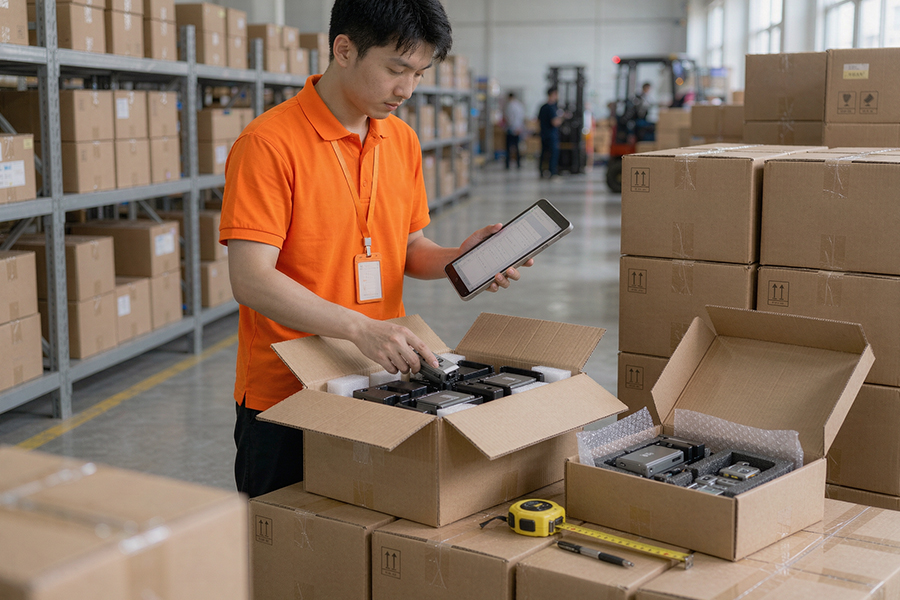
- Inspectors based in Shanghai and the Delta: ask directly, “Are your inspectors in Shanghai, Suzhou, and Jiaxing locally based or dispatched from elsewhere?” Locally based means a same-day response at best and routine next-day factory visits; dispatched means separate travel costs and less flexible scheduling. At the same time, confirm the inspector knows your category — the inspection logic for electronics and apparel is completely different.
- Report turnaround and format: can you view on-site photos in real time during inspection; how fast can the report be issued; does it include annotated defect photos and an AQL verdict; can you review and comment on it online? Inspector Online’s standard is a web-based online report, issued in as fast as 4 hours.
- Traceable inspectors and integrity mechanisms: can you view an inspector’s credentials and past reviews; is there an inspector rotation policy; does the factory sign an integrity declaration on site; is there an appeal and re-inspection process when disputes arise? Platform companies generally outperform individual inspectors here — an individual may charge RMB 100–200 less, but without guarantees or a review mechanism, it’s hard to hold anyone accountable when things go wrong.
- Transparent cost boundaries: the quote should itemize the per-person-day rate, the conditions that trigger travel fees, rush-fee standards, and re-inspection charges. If you can’t get a complete fee schedule before signing, the odds of mid-project price increases are high.
Pre-quote checklist (send these in one go for a faster, more accurate quote):
| Item | Details |
|---|---|
| Inspection type | PSI / DUPRO / loading supervision / arrival acceptance, etc. |
| Product and standards | Approved sample, spec sheet, drawings, AQL requirements |
| Factory/warehouse address | City and district, on-site contact |
| Order quantity and styles | Total quantity, number of SKUs, whether packing is complete |
| Report requirements | Language (English by default; Chinese or others available), special checklists |
6. FAQ: The 8 Questions Shanghai Buyers Ask Most
1. My factory isn’t in Shanghai — it’s in Suzhou, Jiaxing, or Nantong. Can a Shanghai inspection company handle it?
Yes. The two-hour radius across the Delta falls within the routine coverage of Shanghai-based inspectors: typically next-day scheduling, same-day arrival for rush jobs, and in most cases no extra travel fee.
2. How is inspection in Shanghai priced?
Per inspector-day: basic inspection from RMB 550/person-day, standard inspection from RMB 600/person-day; most orders are completed in one person-day.
3. When is the best time to schedule a pre-shipment inspection (PSI)?
When 100% of production and 80% of packing are complete, and before the final payment. Too early and the goods aren’t complete enough for adequate sampling; too late and, when problems surface, both the shipping schedule and the final payment are already locked in.
4. What if the inspection fails?
The report sets out the defect counts and the AQL verdict. You can require the factory to sort and rework, then arrange a re-inspection (with the re-inspection fee agreed in advance), and hold the final payment until the re-inspection passes.
5. What’s the difference between AQL 2.5 and 4.0?
AQL is the “Acceptable Quality Limit.” The common setting for ordinary consumer goods is Critical 0, Major 2.5, Minor 4.0 — zero tolerance for critical defects, a small allowance for major ones, and a somewhat wider allowance for minor ones.
6. Are inspection reports in Chinese or English?
English by default (convenient for overseas clients and platforms), with Chinese or other languages available — just note it when ordering.
7. Can inspection and loading supervision be done on the same day?
Yes, and it’s recommended: after PSI passes, the same inspector moves straight into loading supervision, saving one dispatch fee.
8. Can imports arriving in Shanghai also get third-party acceptance inspection?
Yes. Arrival/import acceptance inspection is performed after goods reach Shanghai Port or a bonded warehouse: verifying quantity, checking for damage, confirming labels, and documenting everything on site — providing grounds for later claims and distribution reconciliation.
Final Thoughts
Shanghai’s value in the foreign-trade chain is as a hub of decision-making and flow: procurement happens here, orders happen here, and most goods pass through here. Inspection arrangements needn’t be dictated by factory location either — put the quality checkpoint wherever the decisions are made and wherever the goods flow.
Inspector Online has spent 20 years in the third-party inspection industry, with 3,000+ registered inspectors covering Shanghai and major Delta industrial belts such as Suzhou, Hangzhou, and Ningbo. It offers a 30-minute response, 7×24 self-service online ordering, and web-based inspection reports issued in as fast as 4 hours, with annotated defect photos and an AQL verdict.
Contact an advisor for a consultation / live quote / to place an order →
Related reading (city series)