Textiles are one of the largest traded categories in global commerce, yet they also have the highest incidence of quality issues. Problems such as color difference, dimensional deviation, sewing defects and substandard fabrics cause billions of dollars in losses to global foreign trade enterprises every year. This article systematically sorts out internationally accepted textile inspection standards, core inspection requirements and complete operational procedures, helping buyers and suppliers establish a standardized quality control system and effectively reduce the risk of returns and trade disputes.
I. Why is Textile Inspection Indispensable?
Textile production involves numerous links and complex processes. Any problem occurring from fabric procurement, cutting, sewing to finishing will affect the quality of the final product. Professional third-party textile inspection can detect quality defects before shipment and prevent unqualified products from entering the market, bringing you the following core values:
- Reduce return rates: Identify and resolve quality issues in advance to avoid high freight and warehousing costs caused by overseas returns
- Protect brand reputation: Ensure that products delivered to consumers meet quality standards and enhance brand trust
- Optimize supply chains: Help factories improve production processes and establish long-term stable cooperative relationships
II. Internationally Accepted Textile Inspection Standards
Textile inspection is mainly implemented based on three types of standards: internationally accepted standards, national standards of importing countries, and customer-specific requirements. Among them, the AQL sampling standard is the most widely used sampling inspection method worldwide.
(I) Basic Sampling Standard: AQL 2.5/4.0
All textile inspections adopt the ANSI/ASQ Z1.4 (formerly MIL-STD-105E) sampling standard. The industry-common acceptance levels are:
- General Inspection Level II: Applicable to most textile orders
- Major Defects AQL 2.5: Defects that affect the usability or safety of the product
- Minor Defects AQL 4.0: Appearance defects that do not affect the usability of the product
- Critical Defects AQL 0: Defects with safety hazards; any single critical defect results in rejection of the entire batch
(II) International Industry Standards
- ISO Standards: ISO 105 series (color fastness tests), ISO 139 series (dimensional stability tests)
- AATCC Standards: Standards of the American Association of Textile Chemists and Colorists, widely used in the North American market
- ASTM Standards: Standards of the American Society for Testing and Materials, covering physical performance tests of textiles
- EN Standards: European Union textile standards, with special focus on hazardous substances and safety requirements
III. Core Requirements and Inspection Items for Textile Inspection
Textile inspection is divided into five categories: appearance inspection, dimensional inspection, workmanship inspection, functional inspection and safety inspection, covering all quality dimensions of the product from inside to outside.
(I) Appearance Quality Inspection
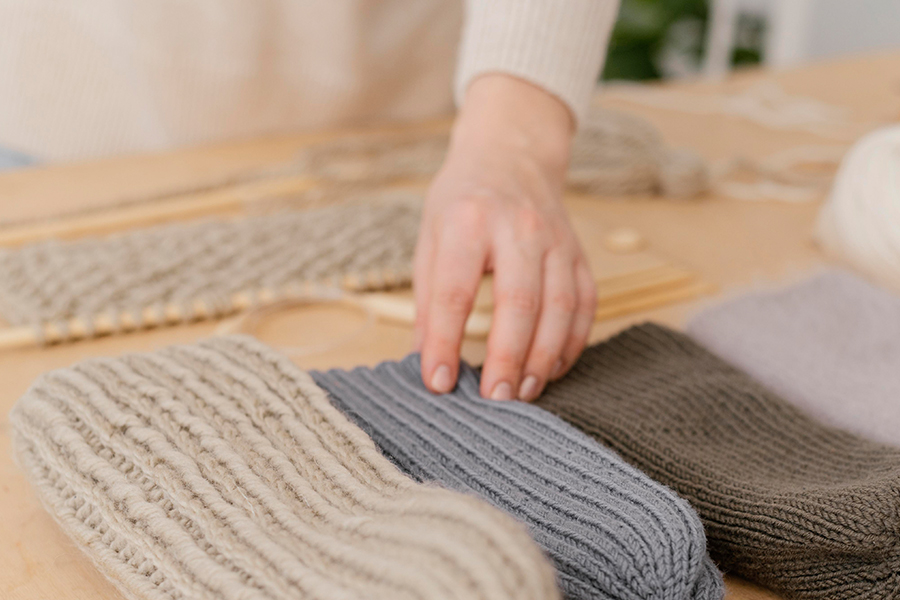
Appearance inspection is the foundation of textile inspection, conducted under natural light or D65 standard light source. It mainly checks:
- Fabric defects: Holes, yarn pulls, pilling, stains, color difference, weft skew, color streaks, color spots
- Accessory defects: Damaged buttons, unsmooth zippers, incorrect labels, insufficient elasticity of elastic bands
- Overall appearance: Left-right symmetry, thread cleaning, neat ironing, no peculiar smell
Key note: Color difference is the most common complaint issue for textiles. It must be rated using a standard gray scale. A color difference of ≥ Grade 4 is acceptable, and the color difference between different parts of the same product shall not exceed Grade 4-5.
(II) Dimensional Specification Inspection
Dimensional deviation is one of the main causes of returns. Measurements shall be taken point by point according to the size chart provided by the customer:
- Apparel: Garment length, chest circumference, shoulder width, sleeve length, waist circumference, hip circumference, trouser length
- Home textiles: Length, width, diagonal length, edge width
Allowable deviation: Generally ±1-2cm, ±0.5-1cm for key parts
Inspection requirement: Measure at least 5 samples per style, and the deviation of all measurement points must be within the allowable range.
(III) Sewing Workmanship Inspection
Sewing workmanship directly affects the durability of the product. It mainly checks:
- Stitch quality: No broken threads, skipped stitches, floating threads or missed seams; even and beautiful stitches
- Seam strength: Firm seams at key parts (such as shoulders and crotch) that do not crack when pulled hard
- Stitch density: Generally 10-12 stitches per 3cm, which can be appropriately reduced for thick fabrics
- Detail processing: Neat hemming, firm pockets, firmly installed buttons/zippers
(IV) Functional Performance Inspection
Corresponding functional tests shall be carried out according to the product purpose:
- Color fastness tests: Washing color fastness, rubbing color fastness, perspiration color fastness, light fastness
- Dimensional stability: Washing shrinkage test (generally required ≤ 3%)
- Pilling performance: Martindale pilling test, reaching Grade 3-4 or above
- Special functions: Water resistance, breathability, flame retardancy, UV resistance, etc.
(V) Safety Inspection
This is the top priority of textile inspection, directly related to whether the product can be smoothly cleared and sold:
- Physical safety: No sharp edges, secure small parts (for children’s products), no long drawstrings (for children’s clothing)
- Label inspection: Complete and correct composition labels, care labels, origin labels and warning labels
IV. Third-Party Textile Inspection Procedures
Professional third-party textile inspection is generally divided into three stages: pre-inspection preparation, on-site inspection and report issuance. The entire process is usually completed within 4-24 hours.
(I) Pre-Inspection Preparation
- Customer order placement: The customer provides order information, product specifications, approved samples and inspection requirements
- Inspection arrangement: Confirm the inspection time, location and inspector, and communicate with the factory in advance
- Data preparation: The inspector carries inspection tools (tape measure, electronic scale, gray scale, flashlight, etc.) and inspection forms
(II) On-Site Inspection Process
-
Goods Confirmation
- Verify whether the quantity, style number, color and size ratio of the goods are consistent with the order
- Check whether the outer packaging is intact and whether the shipping mark information is correct
- Randomly select inspection samples according to AQL standards
-
Appearance and Packaging Inspection
- Inspect the appearance quality of the selected samples one by one and record all defects
- Check whether the inner packaging materials, hang tags and labels meet the requirements
- Check the strength of outer cartons, sealing methods and printing quality of shipping marks
-
Dimensional and Workmanship Inspection
- Measure the sample dimensions point by point according to the size chart and record deviations
- Check sewing workmanship, accessory quality and overall workmanship
- Conduct simple functional tests (such as zipper test, button pull test)
-
On-Site Testing and Photography
- Conduct necessary on-site tests (such as rubbing color fastness, washing test)
- Take photos to record all defects and the overall situation
- Communicate the identified problems with the factory manager and confirm the rectification plan
-
Inspection Summary
- Count the number of defects and judge whether they meet AQL standards
- Fill in the on-site inspection report, which shall be signed and confirmed by the factory manager
- Inform the customer of the preliminary inspection results
(III) Report Issuance Stage
Full bilingual (Chinese/English) official reports can be issued in as little as 4 hours, including detailed inspection data, defect descriptions and photos.
Report content: Basic information, sampling situation, results of inspection items, defect photos, comprehensive conclusion

V. Common Textile Defects and Handling Methods
| Defect Type | Common Manifestations | Severity Level | Handling Method |
|---|---|---|---|
| Color Difference | Color difference between different parts of the same product, color difference between different pieces in the same batch | Major Defect | Acceptable if color difference ≤ Grade 4; severe color difference requires rework or re-dyeing |
| Dimensional Deviation | Exceeding the allowable deviation range | Major Defect | Rework if adjustable; downgrade if non-adjustable |
| Sewing Defects | Broken threads, skipped stitches, missed seams, seam cracking | Major/Minor Defect | Rework for minor defects; remake for severe defects |
| Fabric Defects | Holes, yarn pulls, large-area stains | Major/Critical Defect | Direct rejection for holes and large-area stains |
| Label Errors | Incorrect composition, incorrect origin, incorrect care labels | Major Defect | Must be replaced with correct labels |
Textile quality control is a systematic project. Strictly conducting inspections in accordance with international standards and standardized procedures is the key to ensuring product quality and reducing trade risks. Whether overseas buyers or domestic suppliers, they should attach importance to the textile inspection link and solve quality problems before the goods are shipped.
Inspector Online, as a professional third-party foreign trade inspection company, has more than 10 years of experience in textile inspection. We can dispatch inspectors to any city in China at short notice and issue authoritative bilingual (Chinese/English) reports in as little as 4 hours. We provide full-process quality control services including pre-shipment inspection, during-production inspection and first article inspection, helping you easily control textile quality.