
1. Core Differences at a Glance
| Dimension | Inspection | Testing / Lab Test | Certification |
|---|---|---|---|
| Purpose | Verify whether a production batch meets order requirements | Test whether product parameters comply with standard limits | Assess whether a product/system meets regulatory requirements |
| Location | On-site at the factory | In a laboratory | Certification body + laboratory + factory |
| Provider | Third-party inspector | CNAS/CMA-accredited laboratories | Issuing bodies (SGS, TÜV, UL, Intertek, etc.) |
| Subject | Bulk products (sampled) | Individual or a small number of samples | Product design + quality system + samples |
| Judgment method | AQL sampling statistics (Critical/Major/Minor classification) | Measured data compared against standard limits | Comprehensive assessment (testing + document review + factory audit) |
| Output | Passed / Failed report | Test data report (Pass / Fail) | Certificate (CE, FCC, CCC, UL, etc.) |
| Validity | Valid only for the inspected batch | Valid only for the tested samples | Valid for a fixed term (typically 1–5 years) |
| Approximate cost | RMB 600–1,500 per man-day | RMB 500–5,000 per test item | RMB 5,000 to over 50,000 per certificate |
| Turnaround time | 1–2 on-site days + report within 4–24 hours | 3–15 working days | 2–8 weeks |
2. Detailed Breakdown
Inspection: Batch-by-Batch Verification
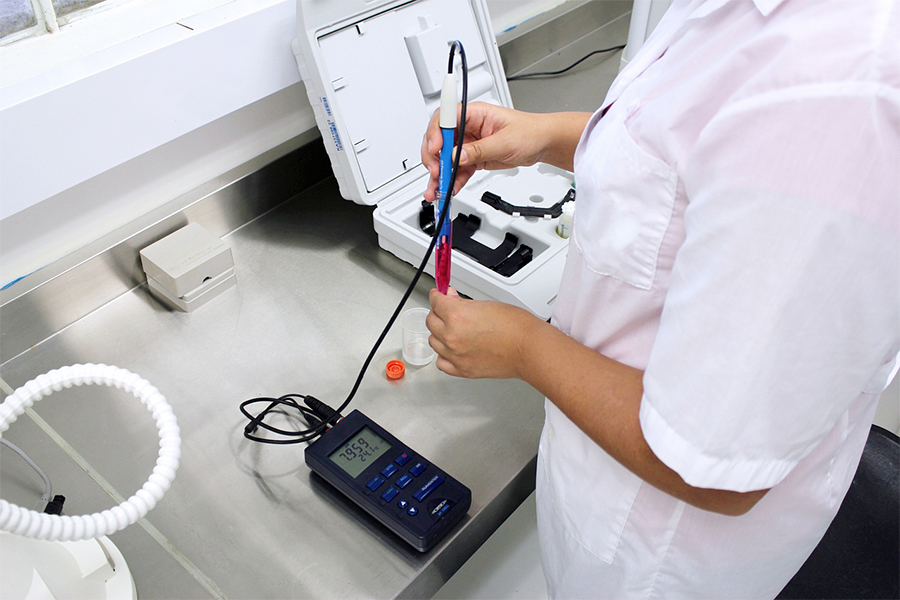
- On-site execution: Inspectors conduct sampling and checks directly at the factory warehouse or production line.
- Sampling-based: Sampling follows AQL standards (GB/T 2828.1 / ISO 2859-1), rather than 100% piece-by-piece inspection.
- Batch-level judgment: A Passed / Failed / Pending conclusion is issued for the entire batch.
- Batch-specific validity: A pass for this batch does not guarantee the next batch will qualify.
Taking 3C electronics as an example, on-site inspectors check for appearance scratches or deformation, verify functional performance, conduct charging tests, inspect packaging marks and labels, count quantities, confirm that CE/FCC marks are printed on the product, and judge the whole batch against AQL standards.
Testing: Laboratory Measurement
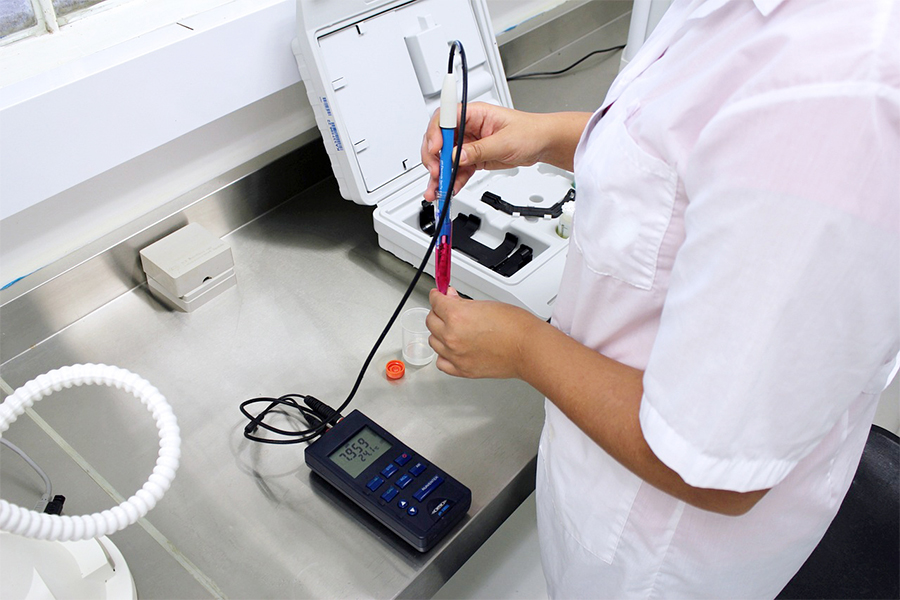
- Laboratory-based: Requires professional instruments and controlled environments (constant temperature/humidity, shielded rooms, etc.).
- Sample-specific: Only the submitted samples are tested; results do not automatically represent the entire batch.
- Data-driven: Outputs precise test data (e.g., lead content 85mg/kg vs. limit 90mg/kg).
- Standard-aligned: Each test corresponds to a specific standard number (e.g., CPSIA for lead content, EN 71-3 for migration elements).
| Test Item | Applicable Standard | Typical Products |
|---|---|---|
| Heavy metal migration (lead, cadmium) | CPSIA / EN 71-3 | Toys, children’s products |
| Electrical safety (withstand voltage, temperature rise) | IEC 62368-1 | Electronics, home appliances |
| Hazardous substances | RoHS 2011/65/EU / REACH | Electrical appliances, plastic parts |
| Flame retardancy | UL 94 / 16 CFR 1633 | Furniture, textiles, electronic enclosures |
| Color fastness | GB/T 3920 / AATCC 8 | Textiles, apparel |
| Tensile / strength | ASTM D5034 / EN ISO 13934 | Textiles, luggage |
| Drop / vibration | ISTA 3A / ASTM D4169 | Packaged goods |
A test report only covers the submitted samples. Passing results for 3 samples do not guarantee that all 5,000 units in mass production will qualify. Process fluctuations, material batch variations and other production inconsistencies can only be caught by inspection — which is why inspection and testing are used in tandem.
Certification: Regulatory Market Access
- Regulation-driven: Certification is not a “nice-to-have” — non-compliance is illegal.
- Comprehensive assessment: Includes sample testing, technical document review and (for some certifications) factory quality system audits.
- Fixed validity period: Typically 1–5 years, with renewal required upon expiration.
- Authorized issuance: Issued by a Notified Body or accredited certification organization.
| Certification | Target Market | Scope of Regulation | Typical Products |
|---|---|---|---|
| CE | European Union | LVD / EMC / RED / RoHS directives | Electrical appliances, machinery, toys, building materials |
| FCC | United States | SDoC / FCC ID radio frequency compliance | Electronic devices, wireless products |
| CCC | China | Mandatory product safety certification | Home appliances, automobiles, toys, wires and cables |
| UL / ETL | North America | Product safety certification (voluntary de facto market requirement) | Electrical appliances, lighting |
| FDA | United States | Food, cosmetics, medical device registration | Food contact materials, cosmetics |
| HALAL | Muslim markets | Halal certification | Food, daily chemicals, packaging |
A certificate confirms that the product design is compliant, but does not guarantee every production batch will meet standards. After obtaining a CE certificate, a factory may still produce non-compliant goods if it switches raw materials, alters processes or relaxes quality control. For this reason, pre-shipment inspection remains necessary even with valid certification.
3. Their Relationship: Complementary, Not Interchangeable
| Stage | Certification | Testing | Inspection |
|---|---|---|---|
| Timing | After product design finalization, before mass production | Pre-production process validation + in-production spot checks | Pre-shipment (100% completed, 80%+ packaged) |
| Objective | Obtain market access qualification | Confirm product parameter compliance | Catch batch defects and ensure shipment quality |
| Frequency | One-time (renewed within validity period) | Pre-production + regular spot checks | Before every shipment |
| Consequence of omission | Cannot clear customs / illegal to sell | Undetected parameter failures, not caught by inspection alone | Batch defects reach the market |

4. Decision Guide by Scenario
Scenario 1: New product, first export
- Certification: CE certification (LVD + EMC + RED + RoHS) is mandatory — without it, customs clearance is impossible.
- Testing: Send samples to a lab before mass production for IEC 62368-1 electrical safety testing and RoHS hazardous substance testing to confirm parameter compliance.
- Inspection: Conduct Pre-Shipment Inspection (PSI) for every batch, sampling appearance, functionality, packaging and CE mark printing to ensure consistent batch quality.
Scenario 2: Mature product, new supplier
- Certification: Usually not required if the product design is unchanged (but verify that Factory B’s material suppliers are on the compliance list).
- Testing: Recommended to submit samples from the new factory for lead and cadmium migration testing (CPSIA / FDA) to confirm raw material compliance.
- Inspection: Mandatory PSI + factory audit for the first 3 batches, to establish a quality baseline and verify the new factory’s quality control capabilities.
Scenario 3: Low-risk commodity, stable shipments
- Certification: Usually no special certification required (subject to target market rules).
- Testing: One material test at the start of cooperation is sufficient.
- Inspection: PSI for every batch, focusing on appearance, quantity and packaging.
Scenario 4: High-risk children’s products
- Certification: A CPSC-required Children’s Product Certificate (CPC), which must be based on testing from an accredited third-party laboratory.
- Testing: Full ASTM F963 testing + CPSIA lead content + phthalate testing, with batch or regular spot checks.
- Inspection: PSI + loading supervision for every batch, with focus on small parts, sharp edges and warning labels.

Common Misconceptions
Myth 1: A CE certificate makes inspection unnecessary
Myth 2: An inspection report can replace a test report
Myth 3: Testing makes inspection unnecessary
Myth 4: Certification is permanent — do it once and you’re done
Myth 5: Inspection companies can issue certification certificates
FAQ
Q1. What tests can an inspector perform on-site?
A1. “Semi-tests” an inspector can conduct on-site include: charging function tests, button response tests, appearance and dimension measurement, color difference evaluation with gray scale cards, simplified packaging drop tests, and ground continuity tests (with portable instruments).
Q2. The factory says the product already has a CE certificate — do I still need inspection?
A2. Yes. A CE certificate confirms design compliance, but does not guarantee every production batch meets standards. Factories may change materials, alter processes or relax quality control during mass production. We recommend verifying the CE certificate’s validity, checking that the CE mark on the product is standardized, confirming technical documentation is complete, and conducting on-site quality sampling during inspection.
Q3. Can inspection and testing be arranged at the same time?
A3. Yes, and this is the recommended approach. Inspector Online can collect samples for laboratory testing on the same day as the inspection. The inspector issues an on-site inspection report within 4–24 hours, and the laboratory issues a test report within 3–15 working days. The two reports together cover both “batch quality” and “parameter compliance”.
Q4. What certifications does my product need?
A4. It depends on the target market and product type. Electronics exported to the EU require CE; electronic devices exported to the US require FCC; children’s products require CPC; home appliances sold in China require CCC; food contact materials exported to the US require FDA compliance. We recommend confirming certification requirements for your target market during the product design stage, to avoid discovering missing certifications after mass production begins.
Q5. Which of certification, testing and inspection can I cut costs on?
A5. Certification cannot be skipped — without it, customs clearance and legal sales are impossible. Testing frequency depends on risk: it is mandatory for high-risk categories (toys, electronics, children’s products) and can be reduced for low-risk daily goods. Inspection is recommended for every batch — it is the most cost-effective way to catch batch defects. The right way to save money is to choose a cost-effective service provider, not to eliminate essential steps.
Q6. What role does an inspection report play in trade disputes?
A6. A third-party inspection report carries independent, professional authority on quality judgment and can serve as important reference evidence in trade disputes. It can be used for customs declaration, insurance claims, quality arbitration and other scenarios. However, it cannot replace a laboratory test report — if a dispute involves whether product parameters meet standards, a test report is required as technical evidence.
Q7. When do I only need inspection, not testing or certification?
A7. When all of the following apply: ① No special regulatory certification requirements (e.g., ordinary daily goods exported to Southeast Asia); ② No safety risks in product parameters (non-electronic, non-children’s, non-food-contact); ③ Long-term cooperation with a factory with stable quality control. In this case, PSI for each batch is sufficient to safeguard quality. Still, we recommend at least one annual sample test to monitor long-term quality stability.
Inspector Online offers free consultation to help you determine which quality control steps your order requires.
Not Sure If Your Order Needs Inspection or Testing?
Inspector Online offers free consultation to help you determine which quality control steps your order needs
Inspection from $103/person-day all-inclusive, covering major manufacturing hubs across China, 30-min response