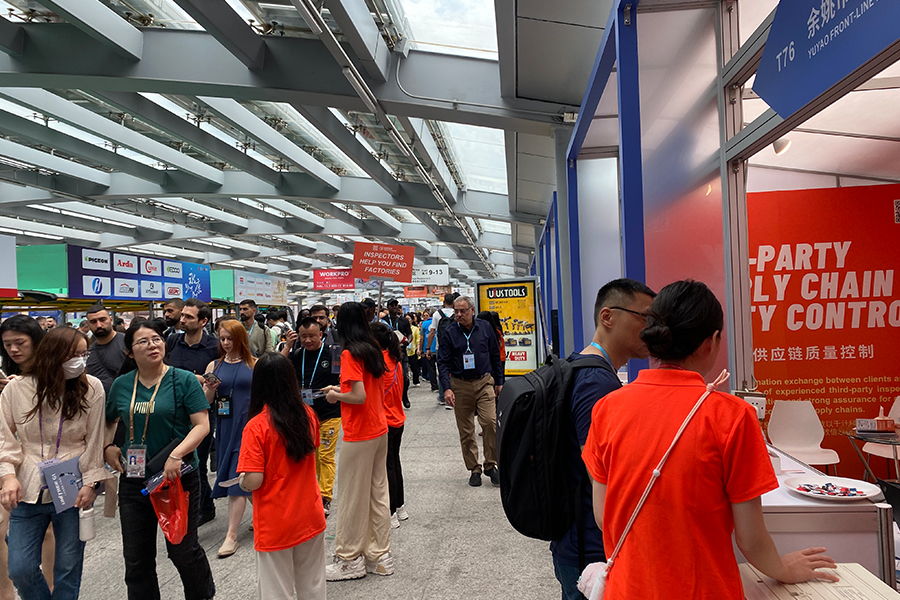
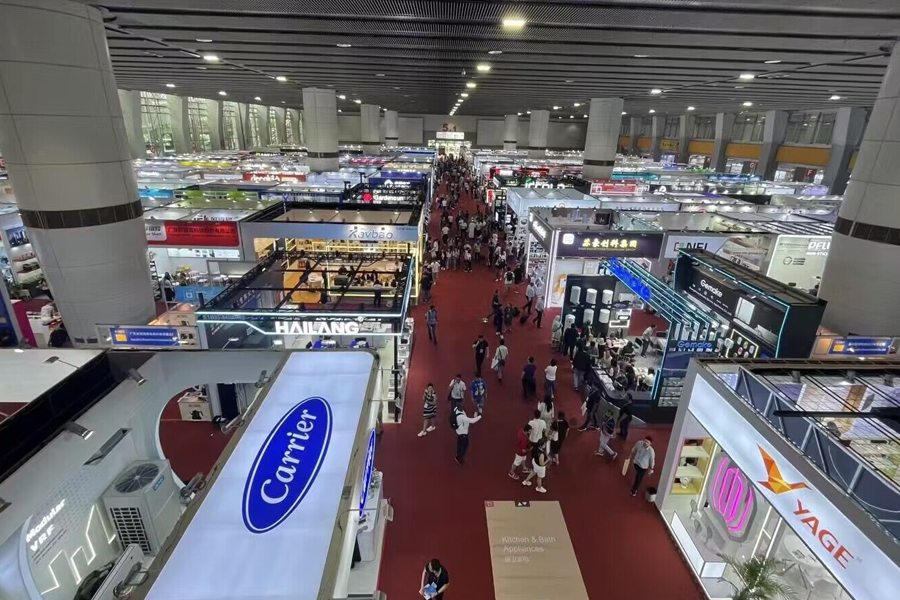
The 140th session of the China Import and Export Fair (Canton Fair) runs from October 15 to November 4, 2026, at the Pazhou Complex in Guangzhou. With roughly 74,600 booths and more than 32,000 exhibitors — including about 31,000 companies in the export section, both record highs — it remains the world’s largest comprehensive trade event.
For buyers, the fair is a rare chance to meet suppliers face to face in just a few days. But the samples, price lists, and business cards collected at a booth say little about a factory’s real production capability or the quality of a production run. Between “seeing a sample at the fair” and “receiving compliant bulk goods,” there is one critical step: supplier verification and third-party inspection.
This guide covers which phase your product category belongs to, five red flags to watch for when vetting exhibitors, why booth samples rarely reflect mass production, and how to combine FAI, DPI, and PSI inspections before and after you place your order.
1. Pick the Right Phase: Where Does Your Product Category Fit?
The Canton Fair runs in three phases, each with a different theme. Arriving at the wrong phase wastes a trip.
| Phase | Dates | Theme | Main categories |
|---|---|---|---|
| Phase 1 | Oct 15–19 | Advanced Manufacturing | Electronics & home appliances, machinery & equipment, vehicles & two-wheelers, lighting & electrical, hardware & tools |
| Phase 2 | Oct 23–27 | Quality Home Life | Daily consumer goods, gifts, home decor, building materials & furniture |
| Phase 3 | Oct 31 – Nov 4 | Better Life | Toys, baby & maternity products, apparel, textiles, footwear, health & medical |
Tip: the fairground closes for changeover on Oct 20–22 and Oct 28–30. These days are ideal for arranging factory visits near Guangzhou.
2. Five Red Flags When Vetting Suppliers at the Fair
While negotiating at the booth, treat the following situations as warning signs and schedule follow-up verification before any commitment:
- No business license or Unified Social Credit Code — a supplier unwilling to show basic corporate identity carries high risk for future cooperation.
- Vague factory address — only “an industrial zone in X city,” refusing to give a specific address or invite a factory visit.
- Quotations far below market rates — unusually low pricing often hides cut corners on materials or workmanship.
- No knowledge of quality standards and certifications — cannot answer basic questions about CE, FCC, ISO, or other target-market requirements.
- Beautiful samples but no discussion of mass-production consistency — a polished sample that never matches bulk output is a classic trap in cross-border trade.
3. Why a Booth Sample Is Not the Real Product
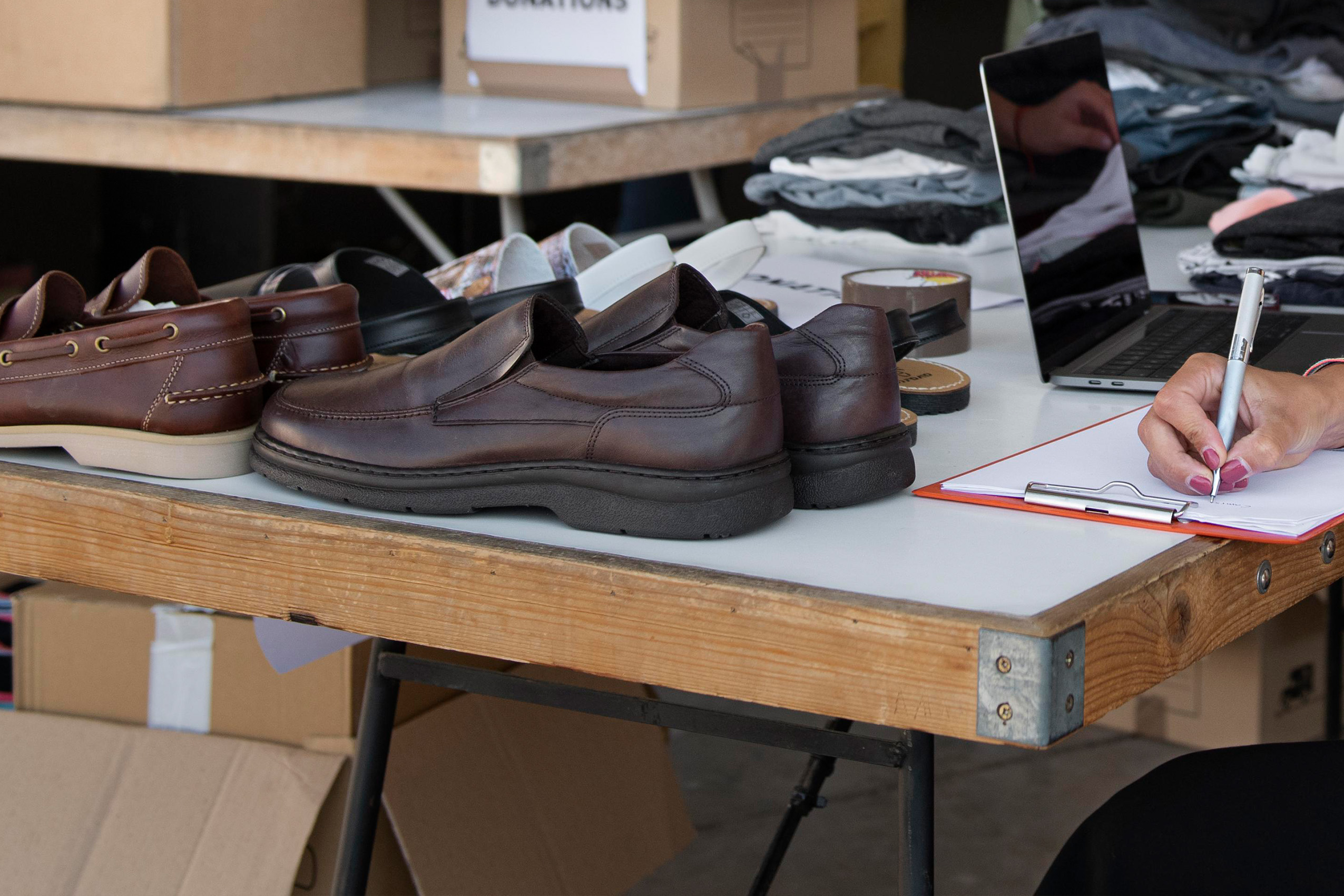
A sample is a supplier’s carefully prepared “best face,” while mass production reflects a factory’s actual capability. The gap usually comes from:
- Raw material batch differences: premium material for the sample, standard material for production;
- Process stability: a skilled craftsman hand-making samples vs. production lines running at scale;
- Limited quality control investment: no dedicated QC staff, relying on workers’ self-discipline;
- Opaque sampling: substituting inferior goods at shipment, or short-counting quantity and specifications.
These gaps cannot be spotted with the naked eye or closed with trust. That is exactly the core value of third-party inspection: an independent, standardized process that makes the real quality of your production run visible — before your money and shipping schedule are locked in.
4. Choosing the Right Inspection Stage (Before and After Ordering)
| Service type | Abbreviation | Timing | When to use |
|---|---|---|---|
| First Article Inspection | FAI | Before mass production | Confirm tooling, process, and materials meet requirements before the whole batch is made |
| During Production Inspection | DPI | At 20%–60% production progress | Catch problems early and leave time for rework and correction |
| Pre-Shipment Inspection | PSI | Before shipment | Final gate: quantity, appearance, function, packaging, and labeling fully checked |
Suggested combinations:
- New supplier, first order → FAI + DPI + PSI full coverage;
- Established supplier (1–2 years) → keep at least PSI;
- High-risk categories (electronics, toys, baby & maternity) → DPI + PSI; don’t rely on the final check alone.
5. How Far Ahead Should You Book Inspections During the Fair?
The Canton Fair window is the peak season for inspection demand. Practical advice:
- Book as soon as the order is confirmed — don’t wait until a week before shipment;
- The 2–3 weeks before and after the fair are peak periods; inspectors’ calendars fill up fast, so earlier booking locks in your slot;
- Factories in the Pearl River Delta (Guangzhou, Shenzhen, Dongguan, etc.) get the fastest response; for the Yangtze River Delta and other production areas, allow extra lead time.
Professional inspection platforms usually maintain inspector networks covering all major production areas in China and Southeast Asia, dispatching the nearest inspector to shorten waiting time.
6. FAQ: Supplier Verification and Inspection Around the Fair
Q1: How much does one inspection cost? Pricing depends on product type, test items, and factory location, typically quoted per inspection/day/factory. Reputable inspection companies give transparent, itemized quotes with no hidden fees before you book.
Q2: Can I place a small trial order with a new supplier met at the fair? Yes, but even a small order should be inspected — a small batch is exactly when you use FAI or PSI to verify real delivery capability and avoid the “small order to hook a big order” risk.
Q3: What if the inspection finds quality problems? The inspection company documents findings with photos on site, issues a detailed report, helps you communicate corrective actions with the supplier, and arranges re-inspection when necessary.
Q4: Could the inspector collude with the factory? Reputable third-party inspection companies operate independent inspector management systems, spot-check mechanisms, and credit records; inspector behavior is supervised by the platform, structurally preventing behind-the-scenes collusion.
7. Take Action Before the Fair Ends
The fair lasts only three weeks, but your sourcing decisions affect order quality for the next year. Keep “seeing samples” and “verifying production” as two separate steps — collect suppliers at the fair, then use inspection to keep risk out of your orders before you commit.
Inspector Online has 20 years of experience in third-party inspection, with 3,000+ professional inspectors covering all major production areas in China and Southeast Asia. Self-service online booking and AI-powered inspection reports, with a response in as little as 30 minutes. Slots are tight during the fair — book early.