For buyers sourcing daily necessities abroad, return complaints cluster around three issues. The color doesn’t match the approved sample. Dimensions deviate enough that products won’t fit their packaging. And the cartons arrive at destination looking like they went through a war.
None of these sound like big problems individually. Yet each one can turn a profitable order into a loss. Color variation beyond tolerance triggers a 30% price markdown. Dimensional jump codes force a full batch rework. Packaging damage means the goods never even reach the shelf. The real trouble is, by the time these surface at the destination port, there’s no fixing them.
This is where daily necessities inspection earns its keep. Catch color, dimension, and packaging issues before shipment, and the loss stays inside the factory instead of traveling overseas. Below, each of the three problem areas gets its own breakdown, covering prevention methods, inspection standards, and how things actually work on the ground.
1. Color Variation Prevention: Start with Light Source and Rating Standards
Color variation ranks as the single highest-complaint item in daily necessities inspection. Plastics, ceramics, textiles, metal surface finishes, almost every category deals with it. Many buyers assume color difference is subjective, impossible to quantify. In practice, the inspection industry runs on a mature, standardized system.
1.1 Standardize the Observation Light Source
The number one cause of misjudged color variation is inconsistent lighting. A factory floor lit by warm-yellow lamps, an inspection bench under cool fluorescent tubes, the same batch looks like two different colors under each.
The standard practice is a standard light source color matching booth, known in the trade as a D65 booth, simulating average daylight at a 6500K color temperature. During inspection, the sample and the approved reference (signed sample) sit side by side inside the booth, observed under the same light at the same angle, with ambient light excluded.
One detail gets overlooked here. The fluorescent tubes inside the booth have a service life. Past a certain point the color temperature drifts, pushing output outside the D65 spec. Industry practice says replace tubes after 2,000 hours of use, or sooner if visible discoloration appears. Check the booth’s calibration status before inspecting, otherwise the color judgment itself is unreliable.
1.2 Quantify Color Variation with the Gray Scale
Calling a difference “slight” or “a lot” by eye alone carries no authority and doesn’t translate to an inspection report. The industry standard approach uses the gray scale for color fastness (GB/T 250, equivalent to ISO 105-A02) for rating.
The scale runs 5 grades across 9 steps, where grade 5 means no color difference and grade 1 means severe difference. Inspection pass/fail criteria typically look like this.
| Gray Scale Grade | Degree of Color Difference | Judgment |
|---|---|---|
| Grade 5 | Virtually no difference | Pass |
| Grade 4-5 | Extremely slight | Pass |
| Grade 4 | Slight | Pass (general requirement) |
| Grade 3-4 | Noticeable | Borderline, depends on buyer spec |
| Grade 3 and below | Significant | Fail |
Standard export orders require grade 4 or above. Premium brands or color-sensitive categories (home textiles, ceramic tableware) push the requirement to grade 4-5. Lock this standard down with the factory during order confirmation, write it into the inspection checklist, and avoid disputes at shipment.
1.3 Batch-to-Batch Variation Is More Dangerous Than Single-Piece Variation
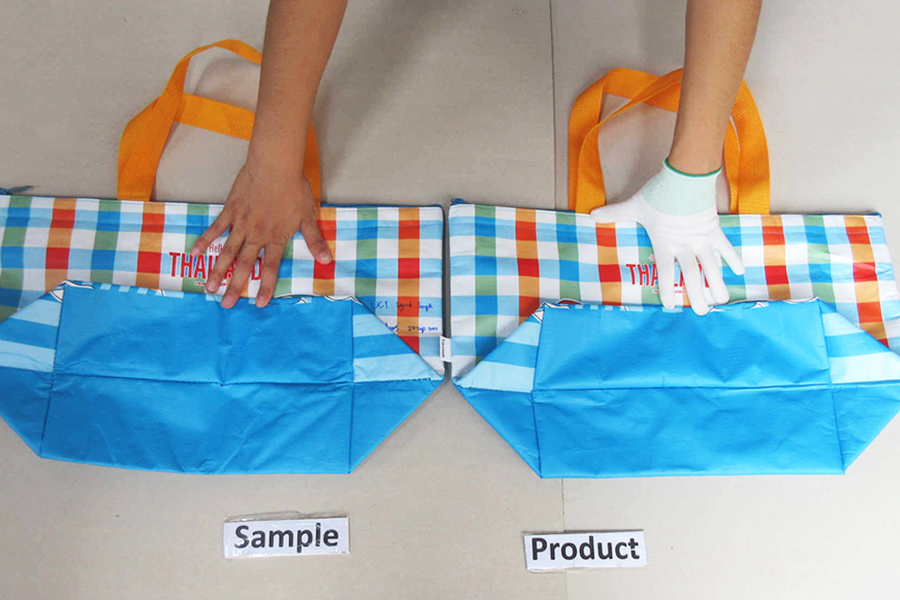
Single-piece color variation is easy to spot. Batch-to-batch variation is the silent killer. One order split across production runs, the first batch on color, the second batch drifting, and by the time both land at the buyer’s warehouse and hit the shelf side by side, the contrast jumps out.
The prevention method is sampling by production batch, not pulling samples from only the first batch and calling it representative. Every batch gets compared against the signed sample, and batch-to-batch variation gets rated too. Any batch showing variation above grade 3 gets flagged separately, never mixed into the same shipment.
2. Dimensional Deviation Prevention: First-Article Sealing and Proper Gauging
Dimensional problems in daily goods take many forms. Injection-molded parts shrink under spec. Stamped parts spring back over spec. Assembled parts stack up tolerance until pieces no longer fit together. None of these get caught at factory outgoing inspection, and all of them reach the buyer as returns.
2.1 The First Article Seal Is the Dimensional Baseline
Dimensional inspection can’t run on feel. It needs a baseline. The first-article sealed sample (Golden Sample) is that baseline.
Before mass production, the factory produces a first article. The buyer confirms and signs off on it, sealing it as the reference standard for the entire run. During inspection, each sampled piece gets compared against the sealed sample first, then checked against the drawing or spec sheet for key dimensions.
The problem is many orders never establish a first-article seal, or the factory quietly changes mold parameters between the seal and mass production. The inspector’s first move on entering the factory is to ask for the sealed sample. An order without one has no dimensional baseline to inspect against.
2.2 Key Dimension Marking and Gauge Selection
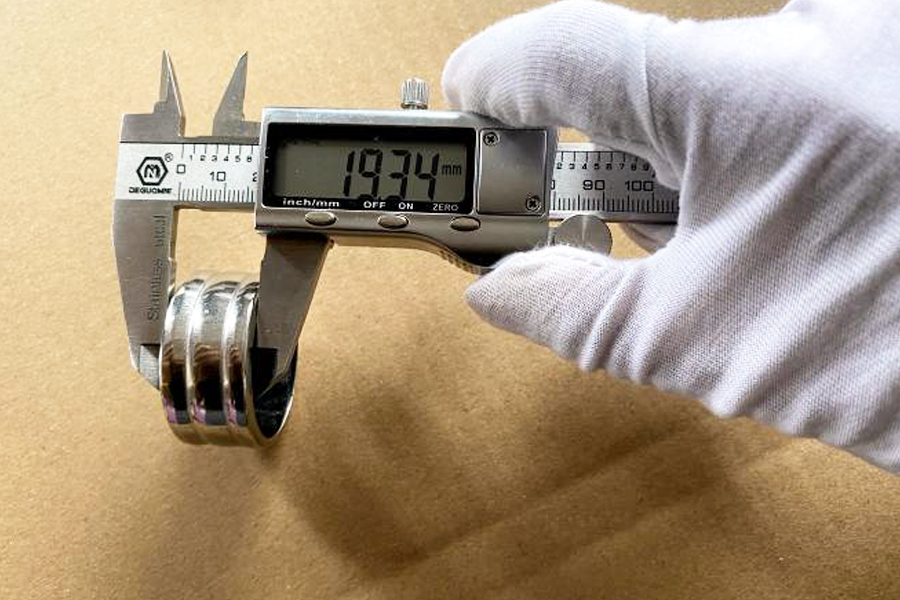
Not every dimension gets measured. Before inspection, confirm with the buyer which are key dimensions, typically those affecting assembly, function, or appearance. For a plastic storage box, that’s the inner rim diameter (does the lid close?). For a towel, length and width (does it fold to spec?). For tableware, diameter (does it fit the packaging insert)?
Gauge selection follows the precision required.
| Dimensional Tolerance | Recommended Gauge | Precision |
|---|---|---|
| Within ±1mm | Vernier caliper | 0.02mm |
| ±2-5mm | Steel ruler / tape | 1mm |
| Above ±5mm | Tape measure | 1mm |
| Angular deviation | Universal bevel protractor | 1° |
Gauges need annual calibration. The inspector brings gauges to the factory with calibration certificates attached. It sounds trivial, but a report without gauge calibration records falls apart the moment the factory disputes a dimensional judgment.
2.3 Follow AQL Sampling, Don’t Just Measure Five Pieces
The worst dimensional inspection is the symbolic one, measure a handful, write the conclusion. The industry standard follows AQL sampling (GB/T 2828.1, equivalent to MIL-STD-105E).
Standard daily goods orders use General Inspection Level II, AQL 2.5 (major defects), AQL 4.0 (minor defects). Take a 3,000-piece order as an example. The table calls for sampling 125 pieces, with an acceptance number of 7 and rejection number of 8 for major defects. Whether an out-of-tolerance dimension counts as major or minor depends on how the deviation affects function. Anything affecting assembly or function is major. Pure cosmetic dimensional drift is minor.
A common misunderstanding here. Buyers assume sampling 125 pieces means every piece gets every dimension measured. In practice, all 125 get measured on 1-2 core key dimensions, with the rest sampled at a set ratio. How that splits up gets decided on-site by the inspector based on dimension criticality.
3. Packaging Problem Prevention: Simulated Transport Testing
Packaging issues fall into two types. One is defects in the packaging itself (thin material, weak seals, misprinted artwork). The other is packaging that can’t survive the drop, crush, and vibration of transit. The first type is straightforward to catch. The second requires simulation testing.
3.1 Packaging Appearance Inspection Checklist
Packaging appearance issues are best handled by running a checklist item by item, rather than eyeballing it.
- Shipping marks match the approved artwork (including barcode, SKU, country of origin)
- Packaging material weight meets spec (carton burst strength, poly bag thickness)
- Sealing method is correct (tape seal, heat seal, staples)
- Interior cushioning is in place (EPE foam, bubble wrap, dividers)
- Label placement is accurate, none reversed or skewed
- Multi-language inserts are complete, no missing or wrong versions
Of these, shipping mark and barcode errors are the most lethal. An unscannable barcode blocks customs clearance at the destination port. A wrong shipping mark sends the goods to the wrong bin in the warehouse. During inspection, scan the barcode on every carton, not just a few.
3.2 Drop Test: Simulating Free-Fall Impact
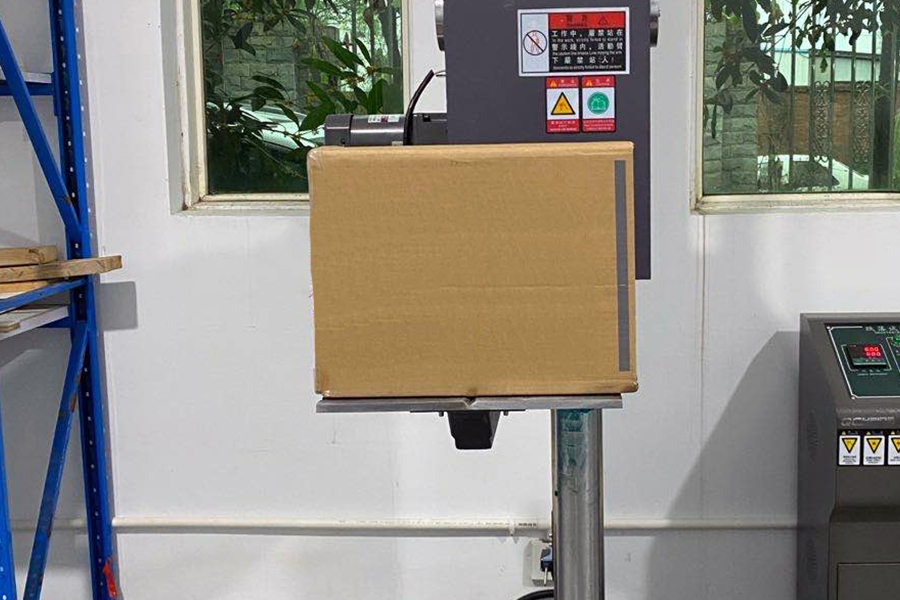
The drop test is the core of packaging inspection, simulating carton drops during handling.
Test standards reference ISTA 1A or GB/T 4857.5. The standard procedure takes one fully packed carton and drops it free-fall from a specified height. Drop height follows package weight, typically 1 meter for under 10kg, 0.8 meters for 10-20kg.
The drop sequence matters. Follow the “one corner, three edges, six faces” order. Drop one corner first, then three edges, then six faces, 10 drops total. After each drop, check the contents for damage, displacement, or packaging deformation.
Pass criteria is no damage whatsoever to contents, no rupture to packaging. Product displacement without damage passes. Packaging deformation that recovers passes. Cracked contents or split cartons fail outright.
3.3 Stacking Test: Simulating Warehouse Compression
Export goods sit stacked in warehouses at destination, with bottom-tier cartons bearing the weight above. The stacking test simulates this.
Standard reference is GB/T 4857.3. Stack the cartons at the actual stacking height (typically 3-5 tiers), add counterweight on top to simulate full stack load, hold for 24 hours. After the test, check the bottom carton for collapse or deformation and the contents for compression damage.
Insufficient carton compressive strength is a common failure cause, usually traced to underweight corrugated board or weak carton structure design. When stacking test failures show up, buyers should chase down the material certificate from the carton supplier.
3.4 Simulated Transport Vibration Test
Sustained vibration during long sea and land transit causes products inside cartons to shift and rub, creating scuffing and wear. The vibration test uses a simulated vehicle transport vibration table, per GB/T 4857.7. The packaged carton gets secured to the table and vibrated at specified frequency and amplitude for 1-2 hours.
After the test, open the carton and check for product-to-product scuffing, cushioning displacement, or fastener loosening. This test matters most for fragile goods (glass, ceramics) and products with precision finishes (mirror metal, high-gloss plastic).
Quick Reference: Three-Issue Prevention Cheat Sheet
| Issue | Prevention Core | Key Standards | On-Site Must-Checks |
|---|---|---|---|
| Color variation | Standardized light source + gray scale rating | GB/T 250 gray scale, D65 booth | Tube hours, batch-to-batch variation |
| Dimensional deviation | First-article seal + AQL sampling | GB/T 2828.1, AQL 2.5 | Gauge calibration cert, key dimension marking |
| Packaging damage | Drop + stacking + vibration tests | ISTA 1A, GB/T 4857 series | Full barcode scan, carton material cert |
Frequently Asked Questions
Q1. Is there a unified standard for color variation judgment in daily necessities inspection, or is it purely visual?
A standard exists. The industry uses the gray scale for color fastness (GB/T 250) for rating. Grade 5 means no color difference, grade 1 means severe difference, and standard orders require grade 4 or above. Observation must take place inside a D65 standard light source color matching booth, with ambient light excluded. For color-critical categories, a colorimeter can measure ΔE values, where a lower number means less difference. Generally ΔE ≤ 1.5 passes.
Q2. How much dimensional deviation is acceptable for daily necessities? Is there a universal standard?
No cross-category universal standard exists. Dimensional tolerances are set by category and function. Dimensions affecting assembly run tight, typically ±0.5mm to ±1mm. Pure cosmetic dimensions run wider, ±2-5mm common. Specific tolerances should be written into the spec sheet or drawing during order confirmation, and inspection judges against the agreed tolerance. Where no explicit tolerance is set, refer to industry convention or confirm with the buyer.
Q3. If the package drop test fails, can the shipment still go out?
It depends on the failure cause. If it’s a packaging design issue (carton too thin, insufficient cushioning), re-packaging and re-inspection can clear the shipment. If the product itself is structurally too fragile to survive a normal drop, the product design or cushioning needs revision, which means a longer rework cycle. The inspection report notes the failure cause and recommended corrective action. The buyer then decides whether to accept a delay based on rework cost and delivery schedule.
Q4. How long does a daily necessities inspection take, and how is it priced?
It depends on order volume and category complexity. A standard daily goods order under 5,000 pieces takes half a day to a full day on-site. Orders involving a full suite of drop, stacking, and vibration packaging tests add another half day. Pricing is per inspector per day, in the 800-2,000 RMB range domestically, slightly higher for projects including packaging tests. Rush report delivery carries a rush fee. A 4-hour report turnaround counts as rush service.
Q5. The batch shows noticeable color variation but the buyer needs the goods urgently. How should this be handled?
It splits into cases. If the variation sits at gray scale grade 3-4 (borderline range), communicate with the buyer about acceptance. If accepted, ship with the color grade noted honestly in the report to prevent later disputes. If the variation falls at grade 3 or below (significant), do not ship. Rework or sort, then re-inspect. The cost of urgent shipment is price markdowns or returns at destination, which far exceeds rework cost.
The three major pitfalls in daily necessities inspection sound like small problems, but each one causes large losses when it hits. Color, dimension, and packaging, every one of these gates has standards to follow and methods to apply. The key is using the right tools, applying the right standards, and running the right tests before shipment. Inspector Online‘s inspectors cover all major daily goods industrial belts across China, with 30-minute response and 4-hour bilingual report delivery. If you have a daily goods order preparing to ship, or are uncertain about the appropriate scope for color, dimension, and packaging checks, we welcome you to contact Yanhuo Online for consultation. We will provide a tailored inspection plan based on your product category and order requirements.