In 2025, the U.S. Consumer Product Safety Commission (CPSC) initiated 232 toy recalls, with 67% involving choking hazards from small parts and excessive lead content. During the same period, the General Administration of Customs of China reported a 9.3% failure rate in random inspections of exported toys. These failures were primarily concentrated in excessive phthalate levels, sharp edges, and missing labels.(Reference link)
Behind these statistics lies a harsh reality: toys are subject to the most stringent safety and compliance requirements among all export categories. If a batch of non-compliant toys reaches the destination port, it faces not just rejection, but recalls, hefty fines, and even lawsuits. For buyers and brands, pre-shipment inspection is the ultimate line of defense for ensuring toy safety. This article systematically breaks down the core processes, safety standards, functional tests, and packaging inspection points of toy quality control to help buyers establish a scientific quality management system.
1. Core Safety Standards for Toy Inspections
Toy inspection is not based on guesswork; every step relies on clear international standards for judgment. Different target markets have distinct standard systems, so it is essential to confirm the product’s destination country before inspection and execute the corresponding standards.
| Target Market | Core Standard | Key Control Areas |
| European Union |
EN 71 (Parts 1-14) |
Mechanical and physical properties, flammability, chemical toxicity (19 migratable elements) |
| United States |
ASTM F963 + CPSIA |
Small parts, lead content (≤90ppm), phthalates (≤0.1%) |
| China |
GB 6675 (Parts 1-4) |
Mechanical and physical properties, flammability, specific element migration |
| Global/General |
ISO 8124 |
Generally corresponds with EN 71 / ASTM F963 |
In practical inspections, third-party inspection companies typically follow the target market standards specified by the buyer. If the order does not explicitly specify a standard, toys exported to European and American markets should reference both EN 71 and ASTM F963 simultaneously. The two standards are similar in most testing aspects, but CPSIA enforces stricter limits on lead and phthalates.
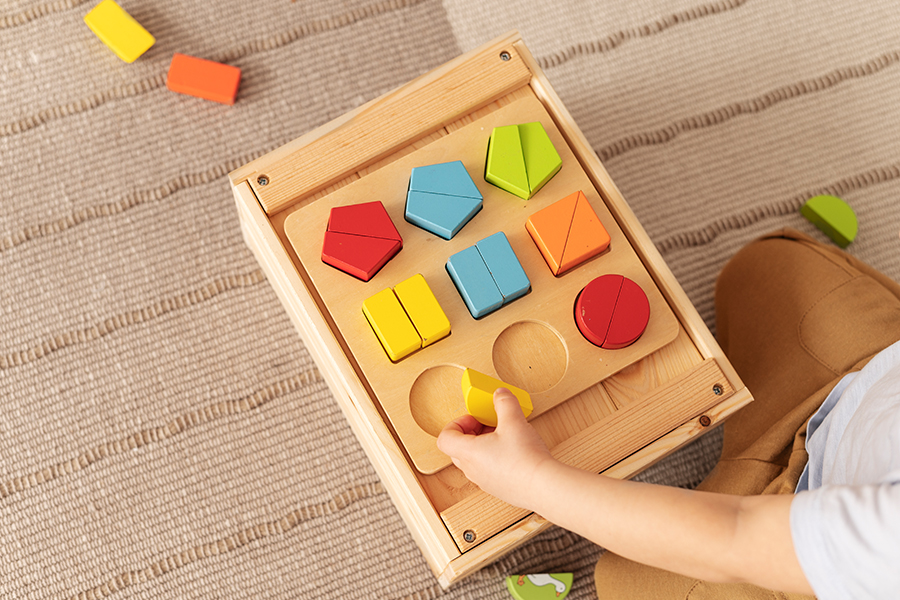
Toy Inspection
2. Visual Quality Inspection: The First Screening
Visual inspection is the foundational step of toy inspection, executed according to AQL (Acceptable Quality Limit) sampling standards (GB/T 2828.1, equivalent to ISO 2859-1). Standard toy orders utilize General Inspection Level II, AQL 2.5 (Major defects), and AQL 4.0 (Minor defects). For example, in an order of 5,000 pieces, 200 pieces are sampled; the acceptance threshold for major defects is 10, and the rejection threshold is 11.
Core Items for Visual Inspection:
-
Surface Defects: Check injection-molded parts for shrink marks, flash, weld lines, or silver streaks; check plush toy fabrics for color deviation, loose threads, or dirt; check painted parts for paint runs, missed spots, or color inconsistencies.
-
Assembly Quality: Verify that joints between components are tight and gap-free, screws are securely fastened without stripped threads, and moving parts (joints, wheels) operate smoothly without abnormal noise.
-
Printing and Labeling: Ensure silk-screen/pad printing patterns are complete without missing characters, stickers are applied straight without peeling edges, and age warning labels or CE/CCC marks on the product are clearly legible.
-
Color Difference: Assess color consistency among products in the same batch against the approval sample. The industry standard grey scale rating (GB/T 250) is used, with regular orders requiring a grade of 4 or higher.
Inspection Case Study: In 2025, a buyer shipped a batch of plastic building blocks from Shantou to Germany and received customer complaints upon arrival: red blocks within the same box had noticeable color variations, appearing in different shades when placed together. A review revealed that the factory used two different batches of color masterbatch and mixed them during packaging. If sampling and color comparison had been conducted by batch before shipment, this issue could have been intercepted at the factory level. Ultimately, the batch was sold at a 15% discount.
3. Safety Standard Testing: The Core Defense
Safety testing is the most critical aspect that distinguishes toy inspection from other product categories. Below are the three primary safety checks that must be strictly executed.
1. Choking Hazard Test (Small Parts)
Small parts are the leading cause of toy recalls. Testing methods reference EN 71-1 / 16 CFR 1501, utilizing a standard small parts cylinder (a slanted-bottom cylinder with a diameter of 31.7mm and a depth ranging from 25.4mm to 57.1mm).
-
Testing Logic: Place the toy or its detachable components (including parts that detach after foreseeable reasonable abuse) into the cylinder. If the part fits entirely within the cylinder, it is classified as a small part and is non-compliant.
-
Judgment Rules: Toys intended for children under 3 years old must not contain any small parts. Toys for children aged 3-6 may contain small parts but must display a choking hazard warning label. Inspectors must pay special attention to this, as many factories incorrectly place “3+” labels on toys intended for 0-3-year-olds to bypass restrictions, which is a severe violation.
2. Sharp Edge & Point Test
Accessible edges and points on toys must not present a laceration or puncture risk. Professional equipment is used for these tests:
-
Sharp Edge Tester: According to the EN 71-1 standard, a layer of PTFE tape is dragged along the edge with a specified force (4.5N). If the tape is cut, it is deemed a sharp edge and fails the test.
-
Sharp Point Tester: According to the 16 CFR 1500.49 standard, a sharp point tester cap is placed over the point. If the spring compression exceeds the set value, it is classified as a sharp point.
-
Focus Areas: Gate trimming residue on injection-molded parts, stamping burrs on metal parts, and chipped edges on plastic parts. These can be touched by children during normal use and are mandatory inspection points.
3. Chemical Safety Verification
Comprehensive chemical safety testing cannot be completed on-site, but inspectors must verify the following documents:
-
Lead Content Test Report for Paint Coatings: CPSIA requires total lead content to be ≤90ppm, necessitating a third-party laboratory report (e.g., SGS, TÜV, Intertek).
-
Phthalates Test Report: CPSIA restricts 8 types of phthalates to ≤0.1% each, with a focus on DEHP, DBP, and BBP.
-
EN 71-3 Migratable Elements Report: Limits the migration of 19 elements (including antimony, arsenic, barium, cadmium, chromium, lead, mercury, selenium, etc.).
-
On-site Chemical Risk Assessment: Smell the product—a pungent plastic odor may indicate excessive plasticizers. Check the material—soft PVC plastic is high-risk for phthalates and strongly requires a test report.
4. Functional & Durability Testing
Functional testing of toys includes normal use tests and reasonable abuse tests. Reasonable abuse testing simulates improper forces a child might apply during play and is a critical step for uncovering hidden safety hazards.
Normal Use Functional Tests:
-
Electric Toys: Verify if the toy starts properly after batteries are inserted, check if sound and light functions work, ensure remote control distance meets specifications, and listen for abnormal noises or stalling in the motor.
-
Mechanical Toys: Check if wind-up/spring mechanisms function properly, ensure gear transmission is smooth, and verify that the ejection force of projectile toys is within safe limits (kinetic energy ≤0.5J, referencing EN 71-1).
-
Plush Toys: Verify that seams are strong with no broken threads, stuffing is even without lumps, and the tensile strength of detachable small accessories (eyes, noses) meets standards.
Reasonable Abuse Tests: Executed according to EN 71-1 / ASTM F963 standards to simulate improper child usage scenarios:
-
Drop Test: Dropped in free fall from a height of 93cm (simulating a child’s standing height) onto a 4mm thick steel plate, for a total of 4 drops (on different faces). Inspect for small parts, sharp edges, or functional damage after the drops.
-
Torque Test: Apply a torque of 0.45N·m to accessible protruding components and hold for 10 seconds. Inspect for breakage or detachment.
-
Tension Test: Apply a tension force of 90N (for components with a maximum dimension ≤6mm) or 60N (for components >6mm) to accessible parts and hold for 10 seconds. Inspect for detachment that forms small parts.
-
Bite Test: Applicable to accessible components of toys for children under 3 years old. A bite tester is used to simulate a child chewing to check if small parts or sharp edges are produced.
Inspection Case Study: A brand exported a batch of electronic keyboard toys with plastic buttons from Ningbo to the US. During the tension test, the inspector found that the buttons popped off under a 50N force, and the detached buttons fit completely inside the small parts cylinder—posing a choking hazard. The factory’s root cause was that the button snap design was too shallow, and insufficient injection pressure during mass production resulted in weak snaps. This shipment was marked “Failed” prior to loading, avoiding a potential mandatory CPSC recall upon arrival in the US.
5. Packaging and Labeling Integrity Check
Packaging issues might seem less critical than safety tests, but non-compliant packaging and labels are a common cause of customs detentions.
Packaging Inspection Checklist:
-
Age Warning Label: The applicable age must be clearly marked in a prominent position on the packaging. Toys for ages 3-6 containing small parts must display a choking hazard warning and a “3+” symbol.
-
Certification Marks: Exports to the EU must display the CE mark (height ≥5mm), and exports to China require the CCC mark. Marks must be permanent and cannot merely be stickers.
-
Barcodes and SKUs: Scan barcodes box-by-box to verify readability and accuracy. Destination port warehouses rely entirely on barcodes for sorting; unreadable barcodes directly cause inbound processing anomalies.
-
Packaging Drop Test: According to the ISTA 1A standard, perform 10 free-fall drops from a specified height (usually 1m for packages under 10kg) in the sequence of one corner, three edges, and six faces. Passing requires no product damage and no ruptured packaging.
-
Shipping Marks: Consignee, destination, carton number, gross/net weight, and the “Made in China” origin mark must be clear and accurate.

Toy Inspection
Toy Inspection Quick Reference Table
| Inspection Dimension | Core Items | Judgment Standard | Key Risk |
| Visual Quality |
Surface, assembly, printing, color difference |
AQL 2.5/4.0 sampling |
Mixed color batches, loose assembly |
| Small Parts Test |
Detachable parts, parts falling off post-abuse |
Fails 31.7mm cylinder |
Choking hazard (leading cause of recalls) |
| Sharp Edge/Point |
Sharp edge tester, sharp point tester |
Tape not cut / spring not exceeded |
Laceration and puncture risk |
| Chemical Safety |
Lead, phthalates, migratable elements |
CPSIA / EN 71-3 limits |
Excessive lead, excessive plasticizers |
| Function & Abuse |
Normal function + Drop/Torque/Tension/Bite |
No small parts/sharp edges after abuse |
Structural weakness causing safety hazards |
| Packaging & Labeling |
Age warnings, CE/CCC, barcodes, shipping marks |
Target market regulations |
Customs detention due to missing labels |
Frequently Asked Questions (FAQ)
Q1: How long does a toy inspection usually take? A1: For standard toy orders under 5,000 pieces, an on-site inspection takes half a day to a full day. If a full suite of abuse tests (drop, tension, torque, bite) is required, an additional half-day is needed. Reports are issued within 4 to 48 hours after the inspection is completed, with expedited delivery available in 4 hours.
Q2: What is the approximate cost of a toy inspection? A2: Billing is based on man-days, generally ranging from 800 to 2,000 RMB per inspector per day in China, depending on product complexity and inspection location. Projects involving chemical safety report verification and abuse testing may cost slightly more. Dispatching inspectors locally from industrial hubs can save on travel expenses.
Q3: If a small parts test fails during inspection, can the goods still be shipped? A3: A small parts failure is considered a Critical Defect (CR), and the inspection report will directly evaluate the batch as “Failed”. If the product is for children under 3, it is recommended to rework the items and reinspect them. If the toy is for ages 3-6, it can sometimes be salvaged by applying a choking hazard warning label and adjusting the age grading, but this must be confirmed with the client first.
Q4: Do chemical safety test reports need to be provided for every inspection? A4: Test reports for the same material from the same supplier can be reused within their validity period (usually 1 year). However, if the factory changes raw material suppliers, modifies the paint formula, or uses a different color masterbatch, the materials must be retested. Inspectors will verify the validity and batch correspondence of the reports on-site.
Q5: What is the sampling ratio for toy inspections? A5: Inspections follow AQL sampling standards. A standard 3,000-piece order samples 125 pieces; a 5,000-piece order samples 200 pieces; a 10,000-piece order samples 315 pieces. Critical Defects (CR) operate on an AQL of 0, meaning finding just 1 CR results in the immediate failure of the entire batch.
When it comes to toy safety, there is no such thing as a minor issue—a single overlooked small part can trigger a full-batch recall, and a single chemical compliance failure can spark a brand trust crisis. Inspector Online covers core toy industry belts such as Shantou, Dongguan, and Ningbo, offering a 30-minute response time and delivering bilingual (Chinese and English) inspection reports in as fast as 4 hours. If you have toy orders preparing for shipment or are unsure about safety standards and sampling plans, contact Inspector Online for a consultation. We will provide customized inspection solutions tailored to your product category and target market.