
In 2025, China’s total foreign trade import and export volume reached 6.35 trillion US dollars, with exports hitting 3.77 trillion US dollars — a year-on-year increase of 5.5%. This marked the 8th consecutive year that China ranked as the world’s largest goods trading nation. Against the backdrop of steady overall foreign trade growth, the commercial equipment and machinery sector, fueled by the robust recovery of the global service industry, has emerged as a core category in cross-border trade with strong resilience and growth potential. As cross-border e-commerce penetration deepens and AI technology enables industrial upgrading, overseas procurement logic is undergoing profound changes, placing higher demands on Chinese exporters in terms of product quality, delivery efficiency and service capabilities.
I. Global Commercial Equipment Market: A New Growth Cycle Driven by Service Industry Recovery
As the underlying infrastructure of the global service industry, the growth momentum of commercial equipment is highly tied to the prosperity of the service sector. Currently, the service industry accounts for over 65% of global GDP, and the services PMI of major economies remains in expansion territory — standing at 52.3 in the US, 55.4 in Southeast Asia, and above 52 in both Mexico and the UK. This strong momentum directly drives rigid demand for commercial terminal equipment and processing machinery.
From the perspective of segmented tracks, six major application scenarios jointly serve as the industry’s growth engines:
- Retail and consumer services: The global rollout of mobile payment and unmanned retail terminals represents a market size of 78.5 billion US dollars with a 2% CAGR. Demand for vending machines, supermarket shelves, refrigeration equipment and related products continues to climb.
- Agricultural and food security: Automated production lines spanning breeding, incubation and intensive prefabricated food processing are in robust demand, with a 92.2 billion US dollar market and 9% CAGR.
- Production and manufacturing processing: Laser processing systems, garment machinery and other equipment are accelerating penetration among small and medium-sized enterprises. The advanced material processing segment alone reaches 68.5 billion US dollars, with a 1% CAGR.
- Events and space creation: The rebound of offline activities has driven demand for truss stages and immersive visual rental equipment, creating a 45.2 billion US dollar market.
- Marketing and advertising equipment: Traditional light boxes are being upgraded to high-dynamic LCD/LED displays, forming a 35.6 billion US dollar market with a 5% CAGR.
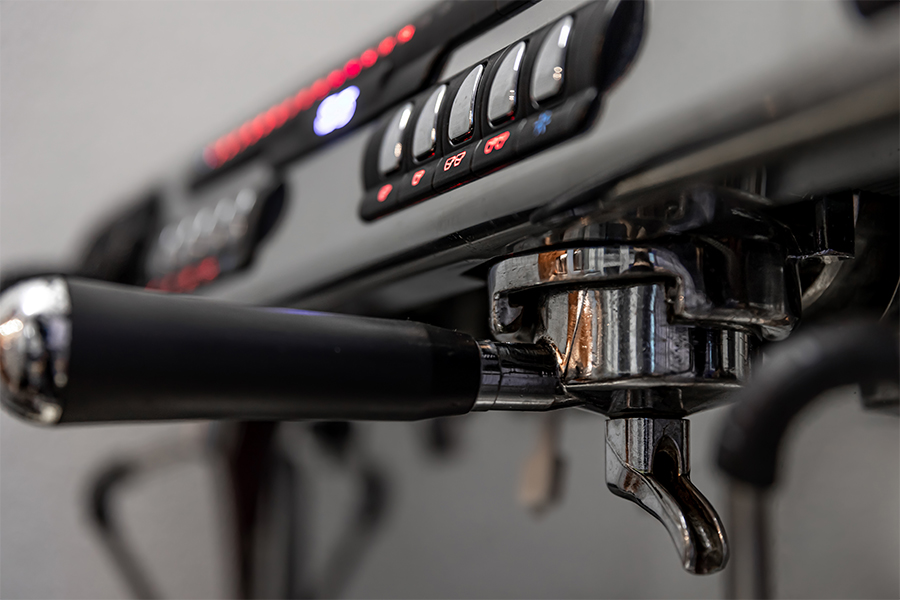
- Hospitality and catering equipment: Automated back-of-house equipment is in clear demand as a cost-reduction solution to replace high-wage labor, with steady growth in categories such as coffee machines and vegetable processing equipment.
Meanwhile, the market is growing increasingly diversified. ASEAN has been China’s largest trading partner for 5 consecutive years, accounting for 17.6% of China’s exports in 2025. Europe now leads in traffic volume, while North America retains the largest transaction value. Emerging markets including Africa and Latin America have achieved rapid order growth fueled by industrialization and livelihood infrastructure development. For commercial equipment exporters, this multi-market growth pattern unlocks broader incremental opportunities, but also imposes higher requirements on supply chain adaptability.
II. Shifts in Procurement Behavior: Three Major Trends From Bulk Customization to Fragmented Fast Response
Beneath the industry’s growth lies a profound iteration of buyer demographics and decision-making logic. Industry data indicates that overseas procurement is unfolding along three notable trends, which also present new challenges to supply chain quality control capabilities.
1. Downward shift of buyer groups: Micro-entrepreneurship drives demand for “livelihood machinery”
The share of traditional large factory procurement is declining, while micro service operators and precision studios — such as food truck owners, self-service laundromat operators and print-on-demand (POD) providers — have emerged as the new buying majority. These buyers place smaller orders with short decision cycles, prioritizing fast delivery and ready-to-use functionality. This shift is pushing categories including vending machines, small food machinery and catering equipment toward a fragmented transaction model defined by frequent replacement, low maintenance requirements and rapid delivery.
2. Delivery certainty takes priority, and in-stock fast shipping becomes core competitiveness
Buyers are willing to pay a premium for delivery reliability, and the share of 7-day shipping orders has risen sharply. In the advertising equipment segment, for example, 7-day shipping order volume grew 32% year-on-year, yet only 11% of available listings support 7-day dispatch — leaving a substantial supply gap. Overseas in-stock fulfillment has effectively become an entry requirement for European and American markets: over 95% of orders from US buyers are shipped from local warehouses, with strong demand for both complete machines and replacement consumables.
Under this high-speed fulfillment model, batch quality failures trigger costly overseas returns and rework, directly eroding store reputation and repeat purchase rates. For suppliers, fast dispatch does not mean relaxed quality standards — on the contrary, it demands more efficient pre-shipment inspection mechanisms to safeguard quality.
3. Shortened decision-making chains: Direct orders replace traditional inquiry workflows
Across almost all categories, the year-on-year growth rate of direct-purchase orders significantly outpaces total order growth. Buyers are rapidly shifting from inquiry-based price comparison to direct purchase based on product listings. For highly standardized categories such as display stands, light boxes and small processing equipment, buyers no longer negotiate parameters back and forth; instead, they complete payment directly based on listed specifications, certifications and quality credentials.
This means that visible, verifiable product quality has become a critical driver of conversion. Clear inspection reports and third-party quality endorsements can effectively reduce buyer hesitation and lift direct-order conversion rates.
III. Amid Supply-Demand Mismatch, Quality Control Becomes a Stabilizer for Overseas Growth
From a supply-demand perspective, many high-growth categories face varying degrees of mismatch: demand for vending machines far outpaces the growth of sellers, making it a classic demand-constrained track; demand for restaurant and hotel supplies has surged, outstripping the capacity of existing suppliers; categories such as laser equipment and digital signage deliver both high average order value and high conversion, but impose strict requirements on product consistency and performance stability.
For exporters, seizing incremental growth must go hand in hand with building a robust quality defense line, to avoid forfeiting market opportunities due to quality issues. Professional third-party inspection services are fast becoming standard practice for commercial equipment exporters, delivering end-to-end quality oversight adapted to diverse shipping models.
Inspector Online, a specialized platform deeply rooted in third-party quality inspection, covers the full spectrum of commercial equipment. In response to current industry trends, it has developed tiered quality control solutions:
1. In-stock fast shipping track: Batch pre-shipment sampling for balanced speed and quality
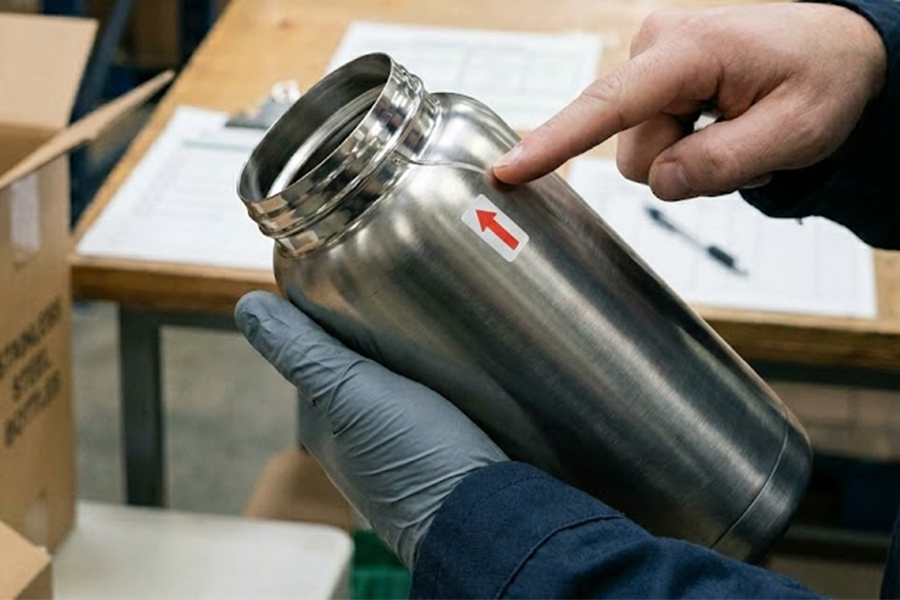
For fast-turnover models such as 7-day shipping and overseas warehouse stock, we provide Pre-Shipment Inspection (PSI) services. Based on Acceptable Quality Level (AQL) sampling standards, we conduct batch sampling on finished goods to verify core criteria including appearance, functional parameters, packaging markings and accessory completeness. This identifies defects early and prevents post-arrival after-sales disputes for entire shipments.
Backed by a nationwide network of inspectors, we can arrange on-site inspections at short notice and issue bilingual (Chinese-English) reports in as little as 4 hours — without disrupting fast-shipping fulfillment timelines. For businesses operating overseas warehouses, pre-warehousing quality inspection greatly reduces return and slow-moving inventory risks, protecting inventory cost margins.
2. Customized orders: Full production chain oversight to mitigate specification deviation risks
For highly customized categories such as laser systems, complete food processing lines and stage lighting setups, we offer full-chain services including First Article Inspection (FAI), in-process production audits and final product full testing. We validate design parameters and process execution at the first article stage, monitor production consistency during mass manufacturing, and conduct comprehensive performance and functional testing on finished units. This ensures customized orders fully align with buyer requirements and cuts down on communication and rework costs.
3. Full-category scenario alignment: Tailored quality standards for every segment
Our services span all commercial equipment categories, including retail fixtures, hospitality equipment, advertising signage, processing machinery and cleaning systems. Inspection standards are tailored to each category’s unique characteristics: catering equipment prioritizes hygienic construction and electrical safety; machinery focuses on operational stability and parameter accuracy; advertising display equipment emphasizes visual performance and installation compatibility. Our solutions are precisely calibrated to the quality requirements of each application scenario.
IV. Growth and Quality Improvement Recommendations for Commercial Equipment Exporters
To capture 2026 market opportunities, exporters can advance on three fronts — product portfolio, quality governance and market strategy — to deliver both scale expansion and quality upgrading:
First, optimize product portfolio structure and align with tiered quality control strategies. Retail and event-focused sellers should prioritize in-stock fast-shipping assortments paired with batch sampling protocols. Manufacturing and engineering-focused sellers should focus on light and deep customization, deploying end-to-end quality control combining first article inspection and in-process audits. Matching quality control intensity to each product line balances efficiency and cost.
Second, enhance quality visibility and use third-party inspection reports as a conversion lever. Embed inspection reports and on-site quality test footage into product detail pages and store profiles as tangible quality proof. This is particularly impactful for direct-purchase buyers, as it reduces decision friction and improves exposure-to-order conversion.
Third, adapt to regional market characteristics with targeted quality check items. For the European market, prioritize verification of CE markings and relevant technical parameters; for North America, focus on product safety and functional reliability; for emerging markets, emphasize durability and ease-of-maintenance testing. This ensures quality control is precisely aligned with buyer expectations in each target market.
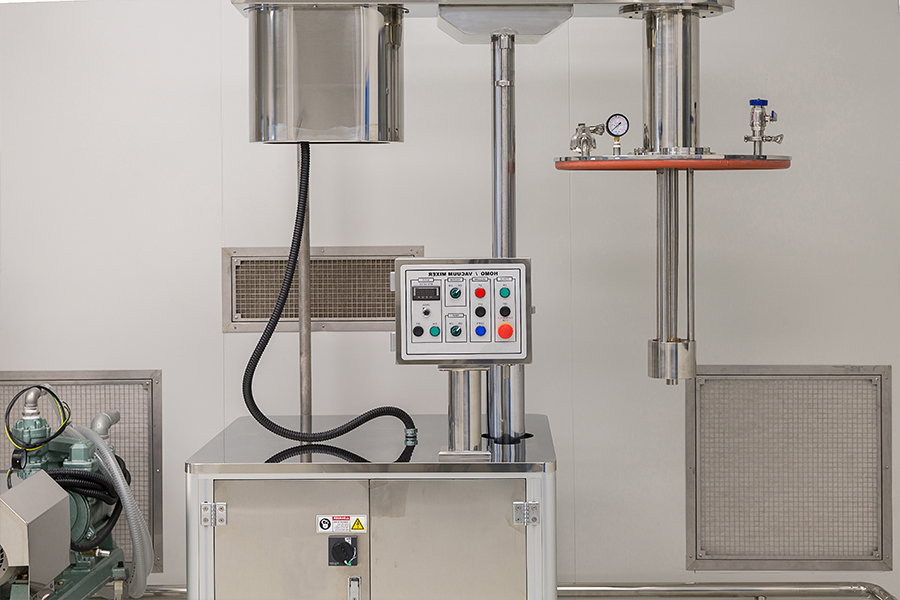
The global commercial equipment market is currently benefiting from the dual tailwinds of service industry recovery and technological iteration. Diversified markets and fragmented demand present vast growth potential for Chinese suppliers. Quality remains the core competitive advantage in cross-border trade. A robust quality control system not only reduces after-sales risks and boosts repeat purchases, but also lays the foundation for long-term brand trust.
If you are building out commercial equipment and machinery export operations, looking to establish a professional quality management system, or require third-party inspection services for specific orders or product categories, please reach out to Inspector Online. We will design a customized quality inspection solution tailored to your product type and shipping model.