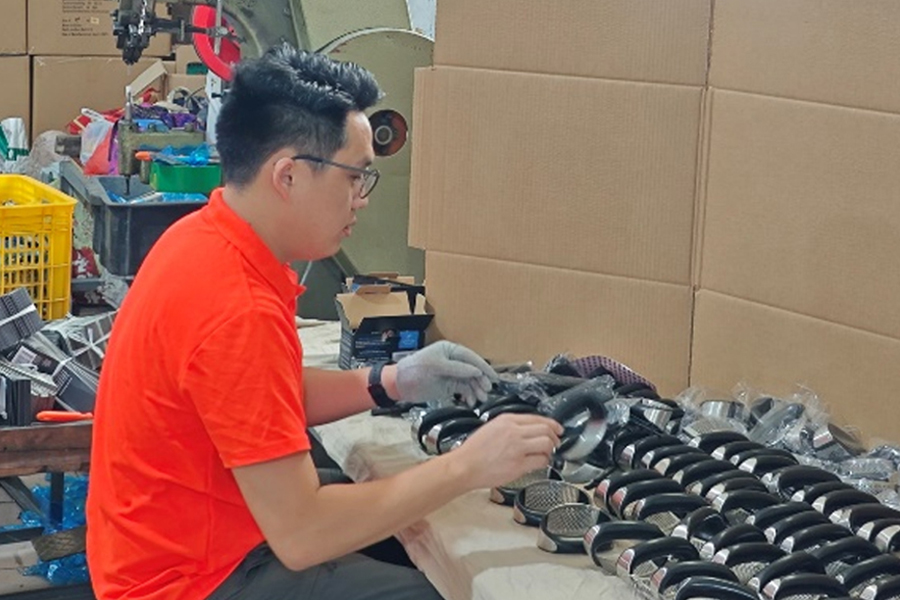

The Role of Third-Party Inspection Companies in the Supply Chain
- It has no financial or operational ties to the factory, so findings are reported exactly as they are found.
- It maintains a pure service relationship with the buyer, not an agency relationship, and produces no biased conclusions for either party.
- The inspection report serves solely as a reference for the buyer’s shipment release decision.
Four Core Stages of Foreign Trade Inspection: What Problems Do They Solve?
| Stage | Timing | Core Purpose | Key Deliverable |
|---|---|---|---|
| Factory Audit | Before formal cooperation | Evaluate supplier qualifications and system capabilities | Audit report with corrective action items |
| Initial Production Check | When 10%–20% of production is completed | Confirm production process and seal first-article samples | Initial production inspection report |
| During Production Inspection | When 50%–60% of production is completed | Correct process deviations and intercept batch defects | Mid-production inspection report |
| Pre-Shipment Inspection (PSI) | 100% production completed, 80%+ packaged | Final quality assessment before shipment | PSI report (core deliverable) |
| Container Loading Supervision | On the day of packing | Supervise loading, verify quantity and seal integrity | Loading supervision report + full-process photo documentation |

Factory Audit: Decide Whether to Partner With a Factory
Initial & Mid-Production Inspection: Stop Batch Defects Early
Pre-Shipment Inspection (PSI): The Final Quality Defense Line
Container Loading Supervision: Prevent Risks in the Final Mile
- Uninspected defective goods are secretly mixed into the container by factory staff after the inspector leaves.
- The packed quantity falls short, causing quantity discrepancies upon arrival at the destination port.
- Cargo is left unsecured and gets crushed entirely during rough ocean transit.
- Seal numbers do not match shipping documentation, leading to customs holds during clearance.
When You Must Use Third-Party Inspection, and When You Can Skip It
- First orders with new suppliers: Factory audit + initial production check + PSI are all mandatory to establish a clear quality baseline.
- Mature products from long-term suppliers: Mid-production inspection + PSI is sufficient.
- Small fast-turnaround orders (under 500 pieces): PSI alone is enough, as a full-process inspection would be cost-prohibitive.
- High-value or high-risk categories (toys, home appliances, children’s products): Do not cut corners—arrange both PSI and loading supervision. A single quality incident can cost more than 10 inspection services combined.
How to Identify a Reliable Third-Party Inspection Company
-
Nationwide inspector coverage
Companies that cover core industrial belts like the Yangtze River Delta and Pearl River Delta, and even extend to third- and fourth-tier production regions, can assign local inspectors to each job. This both reduces travel costs and guarantees faster response times, preventing shipment delays caused by long travel distances.
-
Report turnaround speed
The industry standard is 24–48 hours. Companies that deliver formal reports in 4 hours have highly streamlined workflows, typically supported by robust digital systems that deliver more consistent report quality.
-
Report professionalism
Bilingual (Chinese-English) reports are a basic requirement for foreign trade inspection. English reports must contain accurate defect descriptions, proper standard citations, and clear judgment logic. When overseas buyers use these reports to negotiate with factories, vague or imprecise wording directly erodes their negotiating leverage.
Frequently Asked Questions
Pricing is primarily based on man-days. Domestically, rates range from RMB 800 to RMB 2,000 per person per day, depending on product complexity, inspection location, and urgency. Local inspector assignment in industrial belts eliminates travel expenses, which is the biggest driver of price differences. Inspector Online offers services starting at RMB 600 per person per day, and also supports client-customized pricing.
This falls into two scenarios. If there is a formal purchase contract with explicit inspection clauses, the factory is legally obligated to cooperate. If the buyer did not include inspection terms in the contract, negotiation will be required. We recommend clarifying all inspection terms at the contract stage, including timing, inspection agency, acceptance standards, and report validity.
It depends on the severity and type of non-conformity. Exceeding the minor defect threshold usually allows for shipment after rework and re-inspection. If major or critical defects exceed the limit, full rework followed by re-inspection is recommended. The final shipping decision rests entirely with the buyer, but inspection companies clearly mark one of three conclusions on reports—Passed, Failed, or Pending—to support decision-making.
It depends on order volume and product category. For a standard garment order under 5,000 pieces, on-site inspection takes half a day to one full day. Home appliance inspections require safety testing and usually take one full day. Complex product categories may take one to two days.